.webp)
When it comes to regenerating our city, we need to look at what makes us human: our ability to learn and transform, and our connection to nature and each other. In her first Field Note, Yasmina Dkhissi, Regen Melbourne's new Adaptive Futures Lead, explores what it will take for us to work together and ask the right questions as we make our way through the climate and biodiversity crises.
Do we love what we value or value what we love?
This might be one of those 'chicken and egg' conundrums. I'm now three weeks into my role as Regen Melbourne's Adaptive Futures Lead and onboard with the intention to channel my energy on what deeply matters, so I have been asking myself: What will it take for us to collectively care for our future?
Finding common ground
One thing I have confidence in is that we cannot care for the future alone. It's also not a responsibility that only a handful of people can carry. The job is everyone's. I find Carol Sanford's Regenerative Society Enneagram framework and non-heroic, nine nodal roles a helpful way to frame this idea.
We are human beings. And ultimately, most humans care for their health and wellbeing and that of their loved ones. I believe that when we remember that we, humans, are part of nature, we can relearn to connect to one another and to who we are.
Inspired by nature
I find nature's beauty and genius deeply awe-inspiring. Over the past 3.8 billion years, life has worked out how to test, learn from experience and adapt. As Janine Benyus says: 'life creates the conditions conducive to life'.
It was a curiosity to understand life that first got me into studying chemistry. This led me to designing solar cells with the intention to bring people affordable, renewable power. Reflections on where my energy was best placed led me down the path of sustainable innovation strategy.
At its roots, innovation is about experimenting and our ability to embrace emergent change in ever-evolving sets of conditions. As the poet Antonio Machado knows: we 'lay down a path in walking.'
My current assumptions are that:
the climate and biodiversity crisis we face is, at its roots, a crisis of separation;
by reconnecting to our nature and creating systems that help us do so, we can reconnect with one another and design a better future together
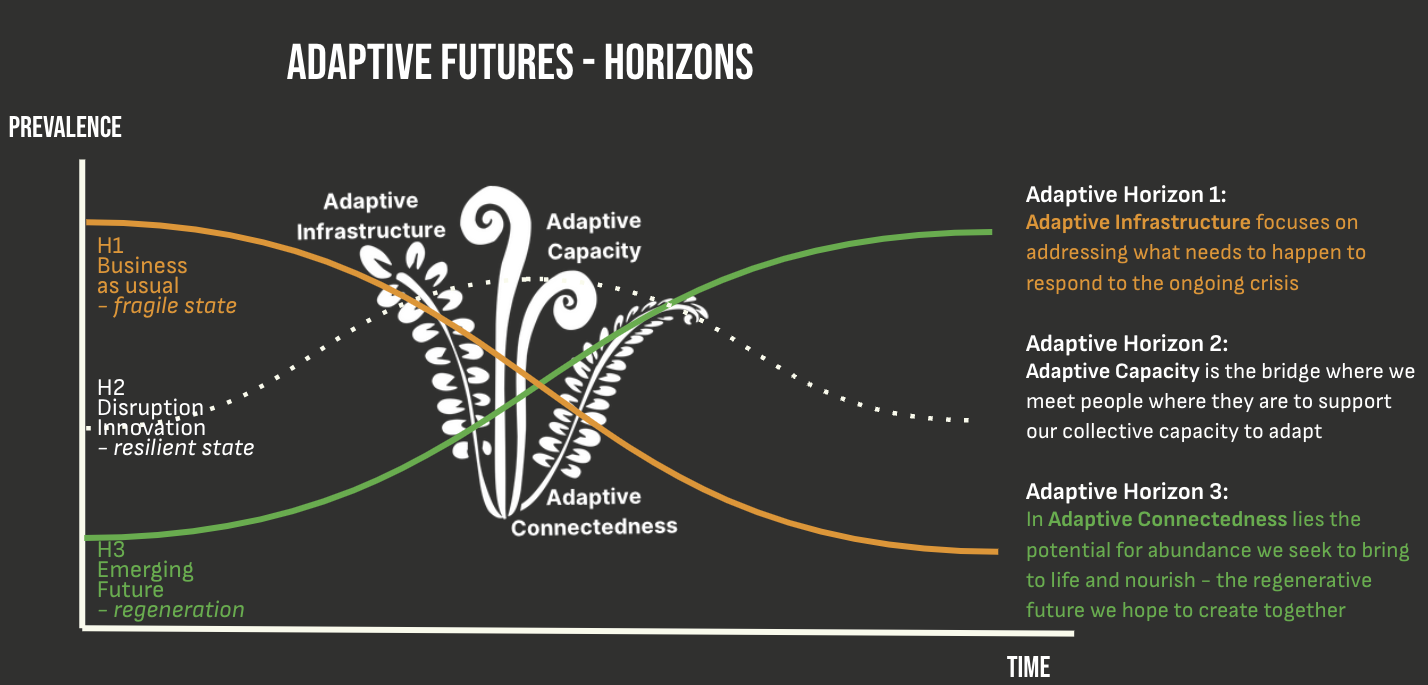
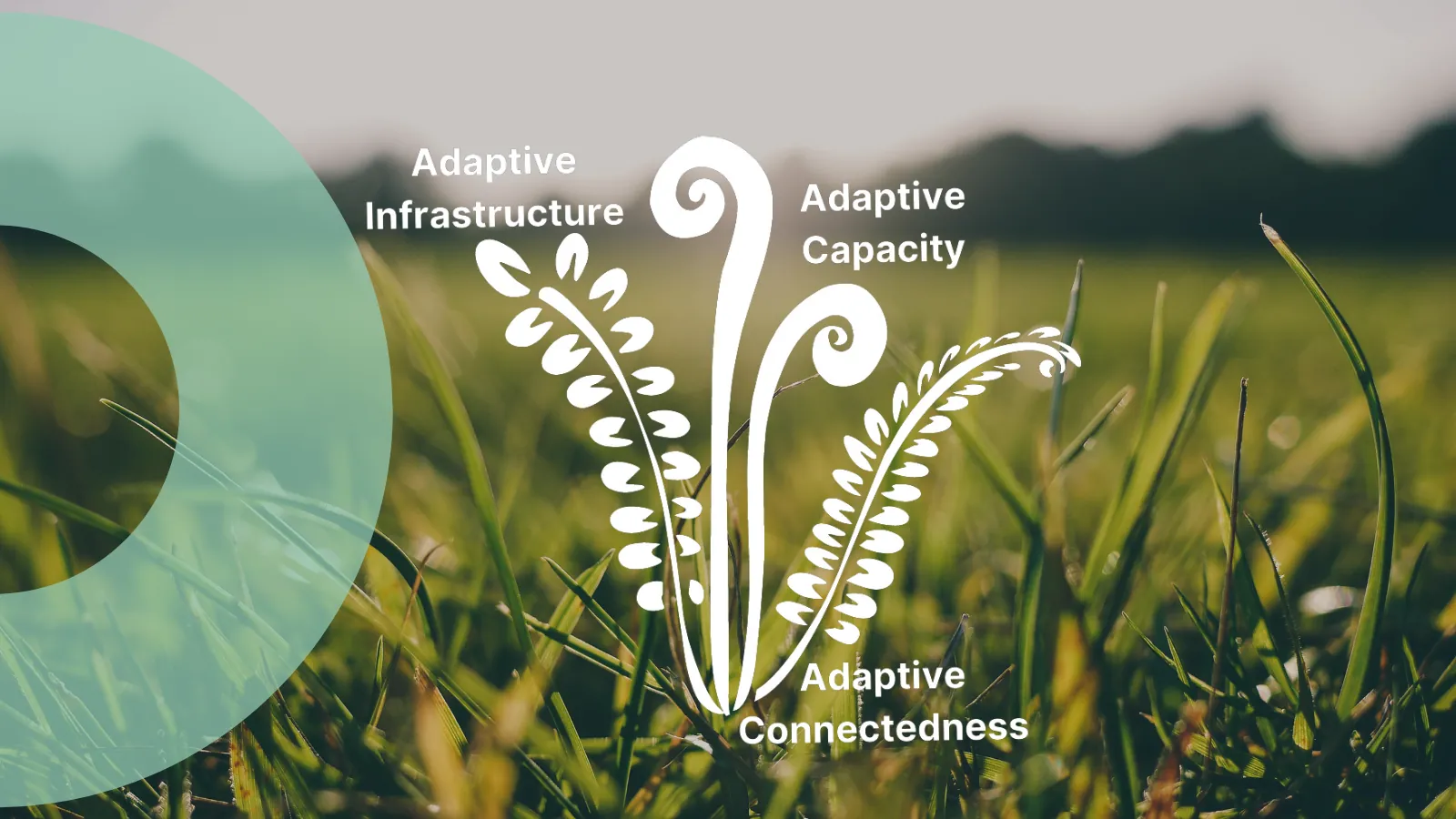
Adaptive Infrastructure
Speaking Bill Sharpe's language of Horizons, this branch focuses on addressing what needs to happen to respond to the ongoing crisis (Horizon 1).
How might we prepare and adapt for the climate change risks and impacts on Greater Melbourne?
Adaptive Capacity
This is the bridge to meeting people where they are to support our collective capacity to adapt (Horizon 2). It's about equipping people with skills to see and question the system they're part of and develop empathy, leadership and agency.
How might we build our collective capacity to adapt to changing conditions and trends?
Adaptive Connectedness
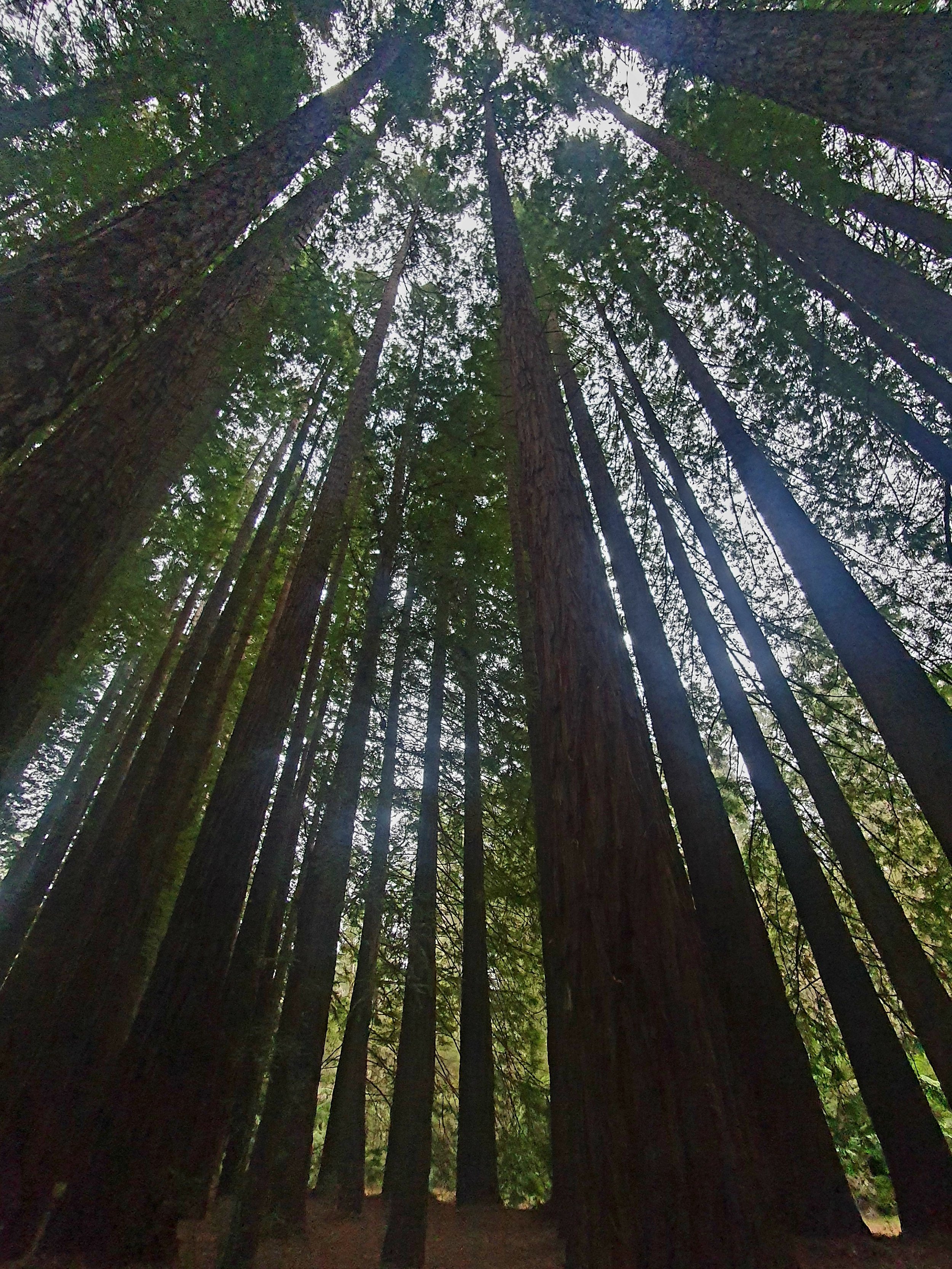
We know that community connection is a major determinant in the resilience of a community when hit by climate disasters. Loneliness is now recognised as the next public health priority by the WHO. Reconnecting with nature and one another is cornerstone to our wellbeing.
How might we shift our relationship and connection to nature – the way we view and value nature?
Which takes us back to the beginning: What will it take for us to collectively care for our future? I believe the answer might lie somewhere in our collective capacity to remember that we are nature.
If you want to come and play, learn and unlearn with us, you can find me at yasmina@regen.melbourne.