A new way of organising for systems change
Regen Melbourne is a platform for ambitious collaboration in service to the regeneration of our city.
Strategic direction
collective vision
A community-defined direction with holistic measures which sets the agenda for change and enables our civic mandate.
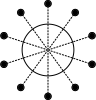
Action pathways
Earthshots
Wildly ambitious orientations for our city, strategic action-oriented pathways to transition to a resilient and regenerative future.

Action-oriented research
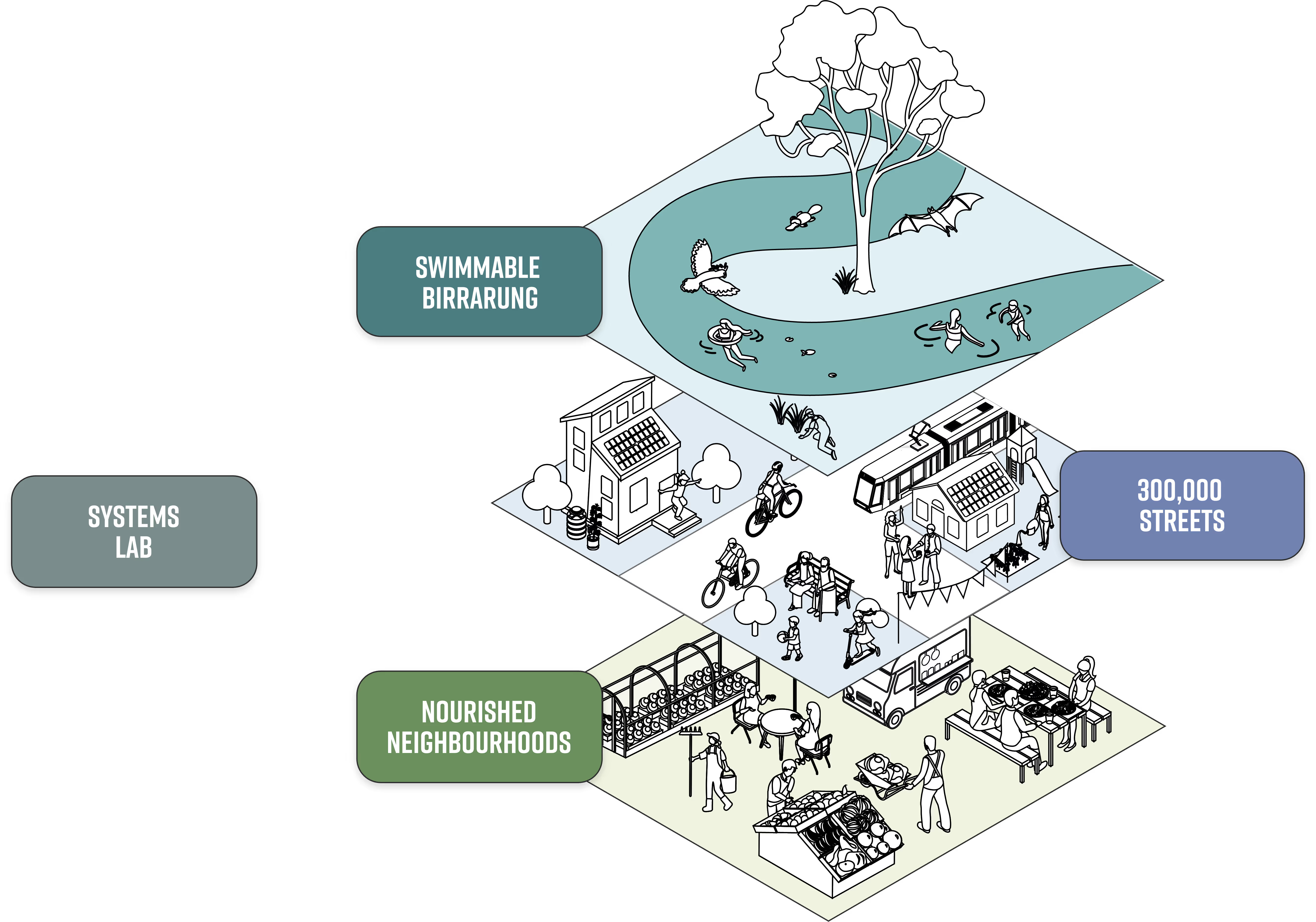
Systems Lab
An action-research platform which uses knowledge and exploration to enable new systemic conditions.

What we do and how we do it
Regen Melbourne exists to organise business, non-profits, government, universities, communities and critical infrastructure towards a safe and regenerative future for our city. This is complex work that transcends traditional understandings of roles and responsibilities. However, across our diverse team we navigate three distinct modes that provide a way of understanding what we do in practice:

Sensemaking in a living city
This is where we make sense of the issues at hand, and where to focus our efforts. We undertake a rigorous systemic analysis of our field of interest.
This includes data collection and research, intensive convening with key stakeholders, connecting nodes of the system to unearth new information, and mapping our findings to help us chart the most effective way forward.

Developing a portfolio of projects
We focus on identifying critical gaps in the ecosystems we are part of and stepping in where coordination, capability or leadership is required. Our role in each project is dependent on the context.
Sometimes we convene and orchestrate partners, sometimes we amplify existing work, and sometimes we actively lead a new project as an acupressure point in the system. These are not stand-alone projects, they come together as nested portfolios.

Orchestrating new collaborations
Collaboration is at the heart of what we do. Systemic problems need systemic responses. This requires coherent action by alliances of unusual actors, from business, non-profit, government, universities and the general public. Since our founding in 2020 dozens and dozens of partners have come together bound by a desire to be in service of our place.
Over time collaborations have formed in a myriad of ways. Sometimes we are invited to support other people’s work, sometimes we convene actors to develop new opportunities for action, and sometimes we actively lead a collaboration around a defined project.
working with place
Regen Melbourne’s work sits at the intersection of many new models, frameworks, worldviews and approaches. These include Doughnut Economics, mission-oriented innovation, systems thinking, regenerative practice, collective impact, and a variety of inner practices that connect our personal development to the outer change we aspire to see come into being.
Ultimately we believe that in transition work we must develop alternatives for our systems to move towards. And we must also work with and confront the system as it is. These can feel like conflicting worldviews at times. And there is no single reliable model that can cure our world or build anew. Instead we centre our work on our place, and on the future of Greater Melbourne and draw on a plethora of models and approaches as needed.
This way of working constantly remixes approaches, mindsets, methods and tools at the intersection of place, theory and practice:
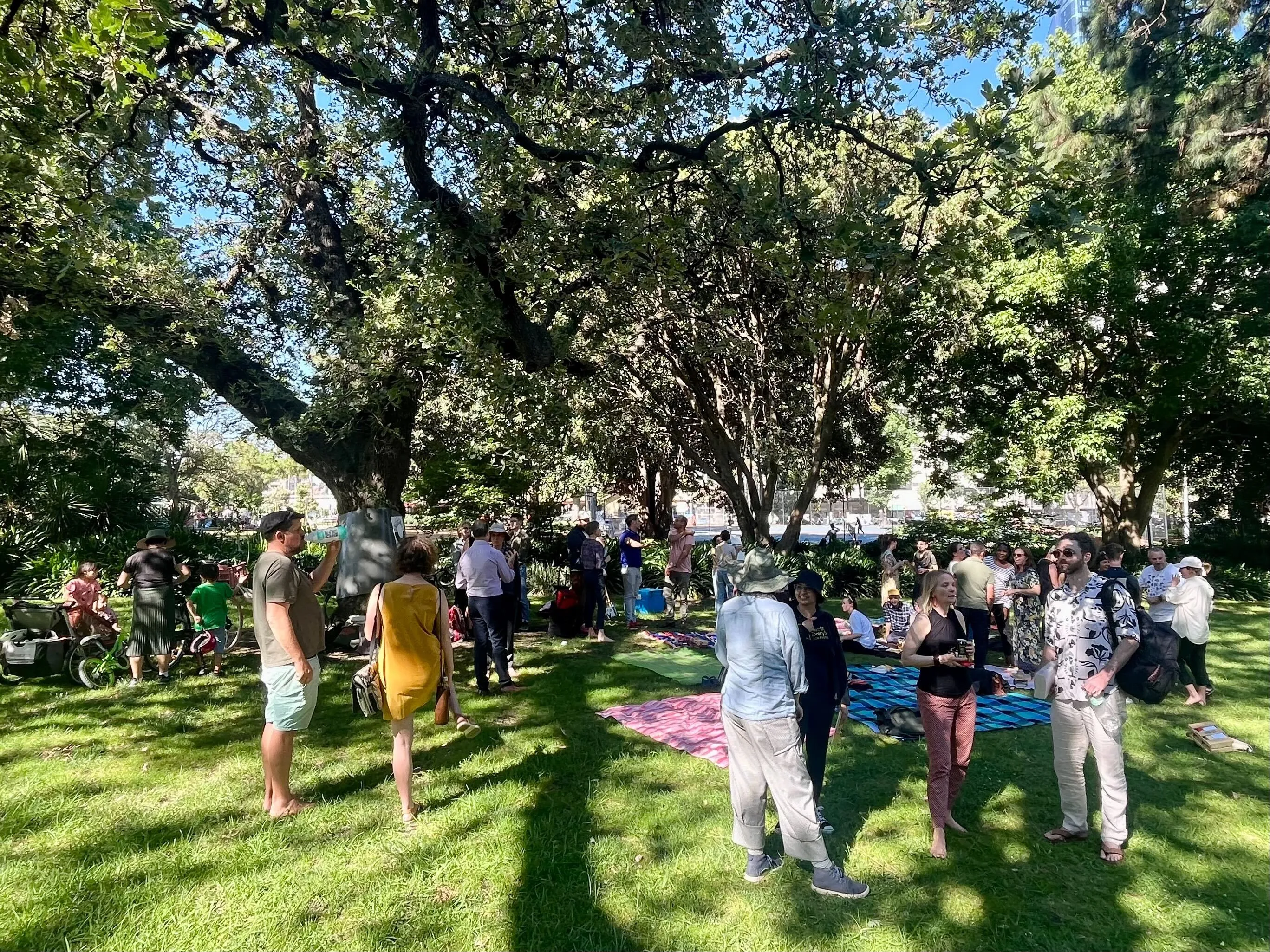
Place
Understanding what’s possible here. Grounded constantly in the context of Greater Melbourne. Recognising we are embedded in a wider system, and yet action will take its own flavour by nature of working in a living, breathing city.
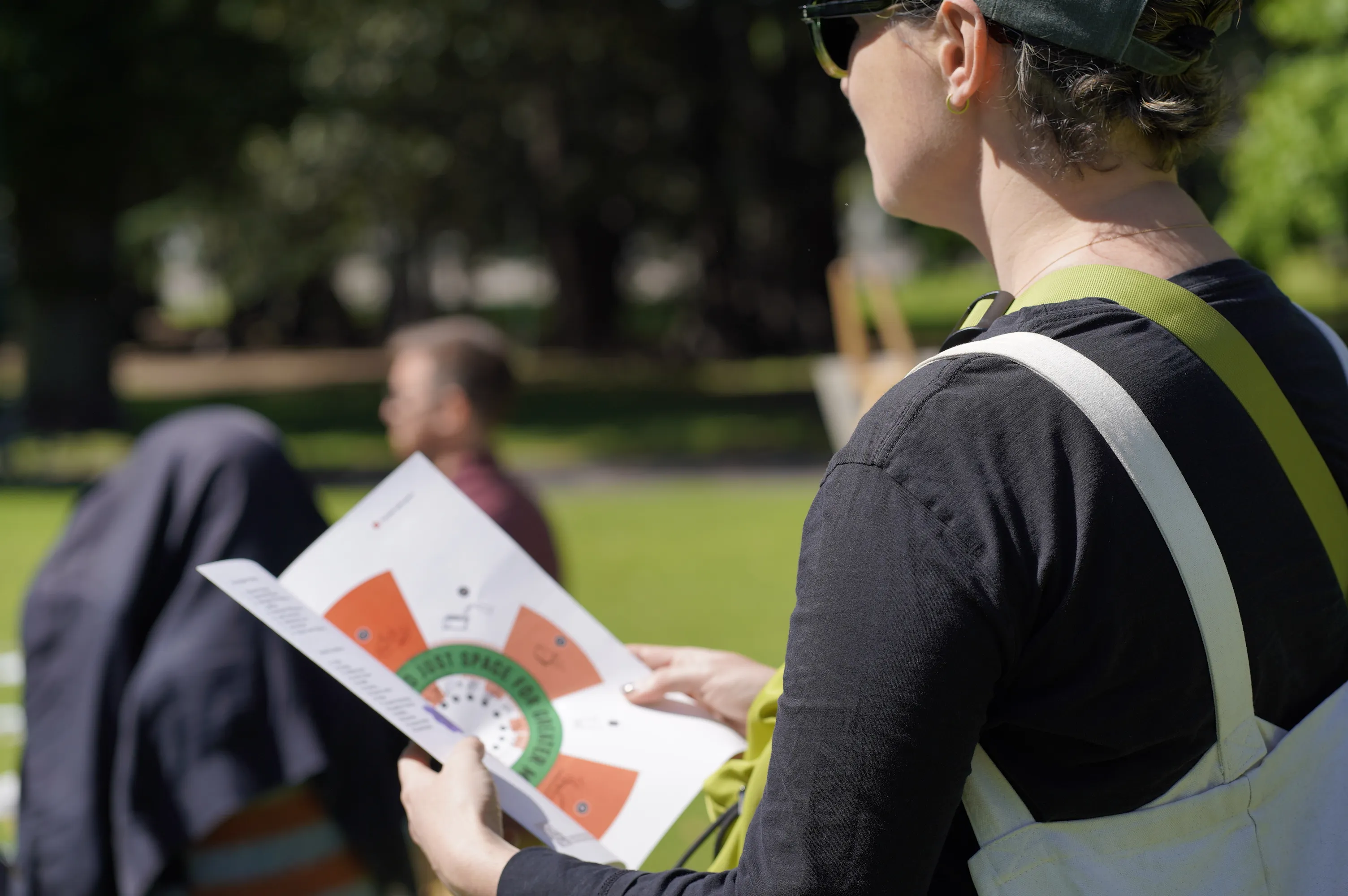
Theory
Understanding how systems work with multi-level perspectives, horizon scanning and foresight, systems frameworks and models. We draw on and adapt mission-oriented innovation and challenge-led approaches through our Earthshots and we draw on and adapt transition theories through our Systems Lab.
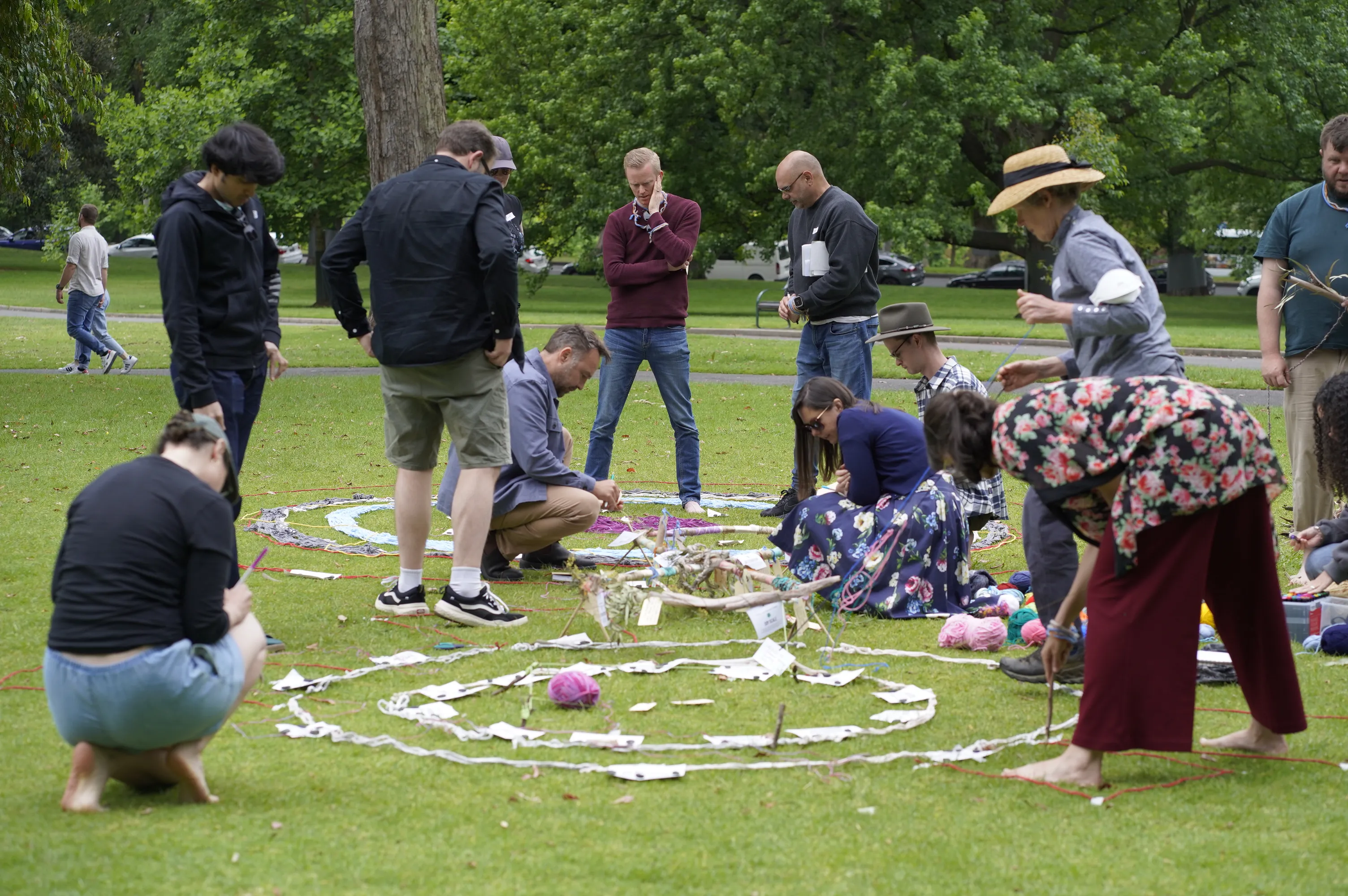
Practice
Dynamic systems don’t change by thinking about them, change must be enacted and in relationship to the world. We are constantly translating, probing, developing and sharing capabilities for moving in and learning through uncertain environments.

HOW WE STAY ON TRACK
We began our journey using Doughnut Economics to guide a large, collective visioning process for our city. Between October 2020 and April 2021 more than 500 people came together to explore what they loved about our place, what challenges we face and what our city could become. Over the course of the following two years, and together with countless partners and academics, the Melbourne Doughnut has progressed from a conceptual model to a practical tool for measurement.
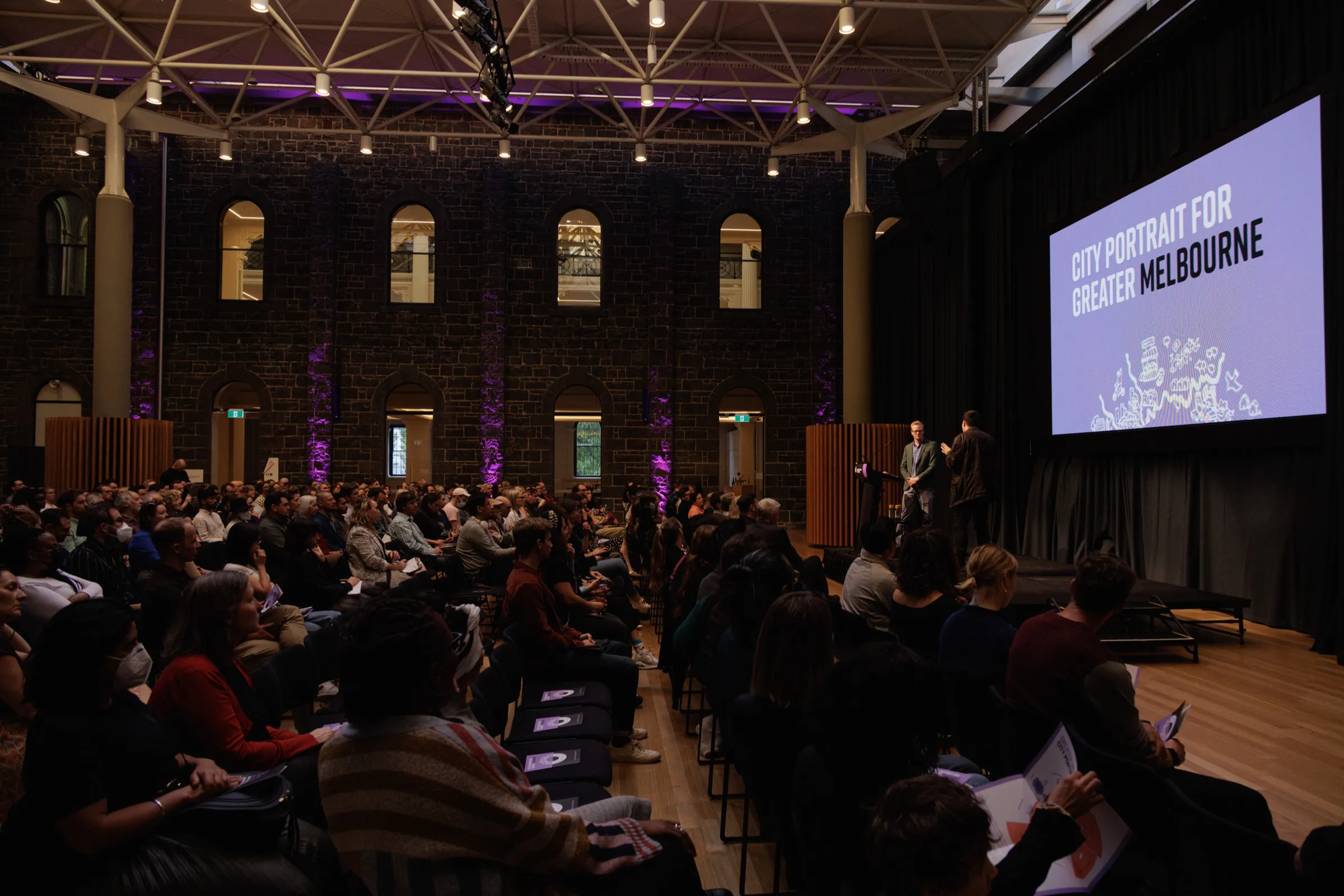
The Greater Melbourne City Portrait is an Australian-first project to create a new compass for progress for our city – a platform that gives all citizens a practical and holistic way of measuring how well Melbourne is supporting people and planet to thrive. The City Portrait now points us to the types of actions, policy decisions, investments and mindset shifts required to embrace a regenerative future for our city. It acts as a compass for all our work.
BRINGING IT ALL TOGETHER
How do we bring these ideas together in a strategy for systems change, when so much is uncertain, relationships are as much of a focus as projects, and feedback loops are so long?
For some answers we turn to nature itself. Nature is beautiful, messy, non-linear, distributed and emergent. It is the most perfect and intuitive system known to us. With such brilliant complexity and inter-connectivity, how do you even begin to find understanding, or navigate to where the most potent points of healing and reconnecting might be?
As children, our understanding of nature might begin with awe and curiosity. As we get a little older, we discover the periodic table of elements: the distillation of the fundamental building blocks of life itself. It turns out we can understand our natural ecosystem by diving into the foundational elements that interact to create our universe.
These elements don’t all behave the same way. Some are abundant, some are scarce. Some are incredibly stable and strong, others are reactive and dynamic. The reality that our messy, complex, beautiful, inter-relational natural world is made up of mappable, powerful, discrete elements makes the periodic table an enticing metaphor for new strategic thinking.
There is a lot here. Take a look.
.png)