
.jpeg)
Our work in New Narratives of Place is made up of a Learning Portfolio that includes real storytelling, media and narrative-building activities which have a combined doing and learning emphasis. The Learning Portfolio responds to two interconnected themes, each underpinned by supporting how-to learning questions.
Storytelling as a practice is as old as time; participating in shaping narratives continues to hold enormous potential to enable people and communities to build agency and collective identity. This theme focuses on how we can use the creation of stories as a change-making tool at local and city-wide scales. Our learning questions within this theme include:
The stories we tell, and are told, shape our beliefs and values, and in turn our relationships with each other and our environments. This theme focuses on developing and disseminating new stories of regeneration within our Earthshots, across Melbourne and in relation to our economic system. Our learning questions within this theme include:
Our work in Collaborative Research Ecosystems is made up of a Learning Portfolio made up of real research projects and partnerships which each have specific objectives as well as an emphasis on how they are shaped and conducted. The Learning Portfolio responds to three interconnected themes, each underpinned by supporting how-to learning questions.


.jpeg)


%2520185%2520(1).jpeg)
Our work in Systemic Investment is made up of a Learning Portfolio that includes diverse finance and capital projects responsive to our Earthshots’ needs. At the same time, we are exploring what is required to shift paradigms and build capability across capital systems, in and beyond our city. The Learning Portfolio responds to interconnected themes, each underpinned by supporting how-to learning questions.


.jpeg)

.jpeg)
%2520Medium.jpeg)


Our work in New Urban Governance is made up of a Learning Portfolio that includes projects based within our Earthshots, giving them specificity and place-based context in Melbourne. At the same time, we are exploring some governance-related questions more broadly, where working in collaboration with partners at a conceptual level is important. The Learning Portfolio responds to three interconnected themes, each underpinned by supporting how-to learning questions.
%2520(1)%2520Medium.jpeg)


%2520Medium.jpeg)
%2520(1).png)

.jpeg)


%2520185%2520(1).jpeg)

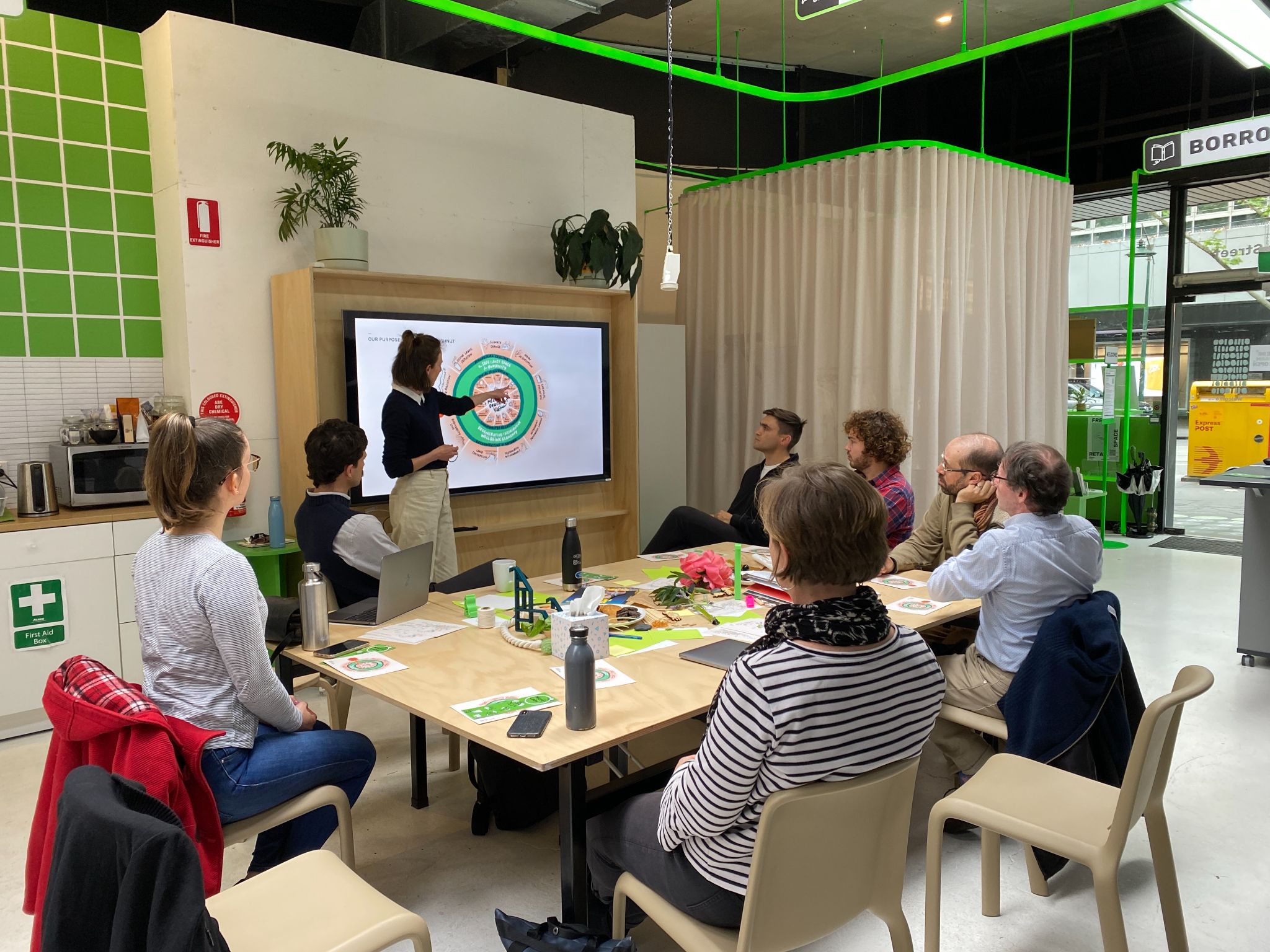
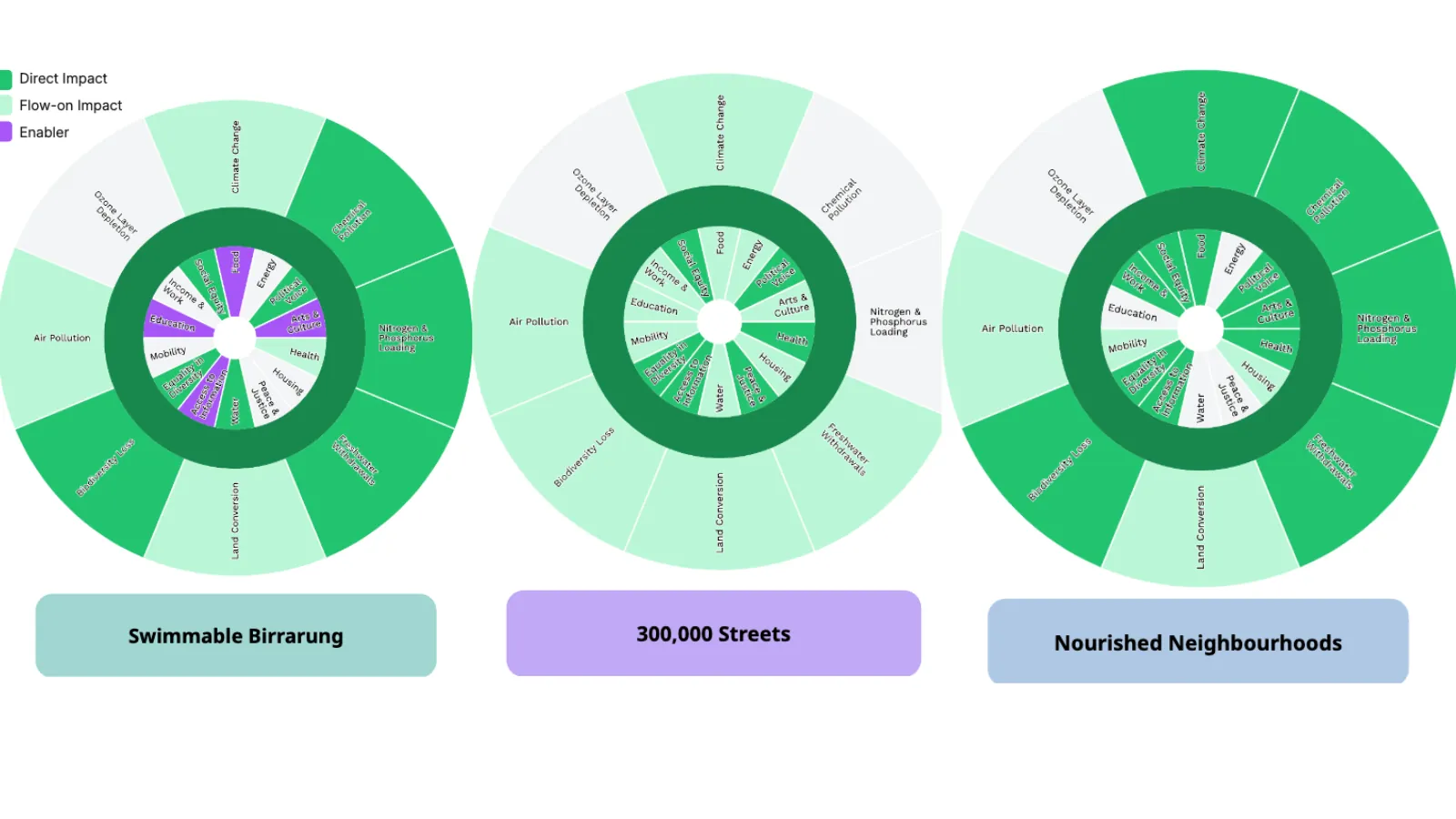
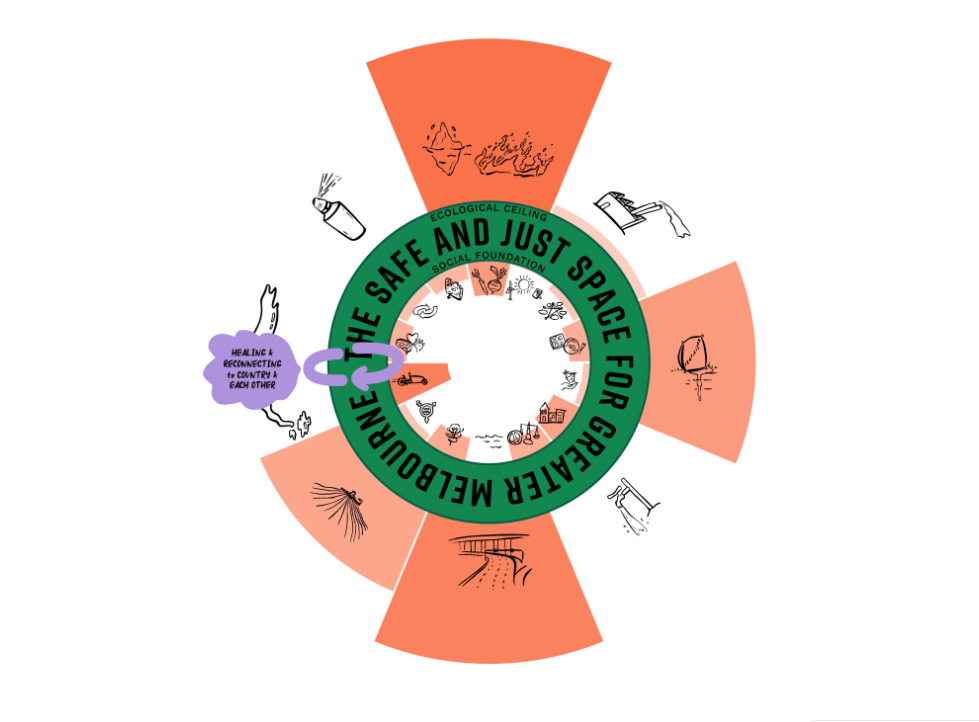
Our work in Measuring What Matters focuses on how to deploy measurement to enable long-term change to our understandings of, relationships with and decisions about our social, ecological and economic systems. We approach this through a ‘Learning Portfolio’, made up of real projects in practice which have a combined doing and learning emphasis. This work originated with our exploration of Doughnut Economics and development of the Greater Melbourne City Portrait as a way to holistically define and measure long-term goals for Melbourne’s regeneration. We continue to build on and draw from this work, while also considering how measurement can facilitate change and decision-making in real-time, through inclusive and democratic practices.


.jpeg)


Our work in New Narratives of Place is made up of a Learning Portfolio that includes real storytelling, media and narrative-building activities which have a combined doing and learning emphasis. The Learning Portfolio responds to two interconnected themes, each underpinned by supporting how-to learning questions.
.jpeg)


%2520Medium.jpeg)


How research and learning occur is generally driven by the resources and structures available to support it. This theme focuses on how we can orient existing and new research instruments and models towards holistic, public-good outcomes. Our learning questions within this theme include:


.jpeg)


%2520185%2520(1).jpeg)


Research and learning in response to complex challenges is most effective when understood as a practice that incorporates diverse perspectives and a sense of deeper connection. This theme focuses on how we can establish purpose-driven and integrated, relational approaches to research collaboration. Our learning questions within this theme include:


%2520185%2520(1).jpeg)
Creating new knowledge is key to addressing our current social and ecological needs, but current definitions of research impact, and institutional silos, limit the potential for public-good outcomes at-scale. This theme focuses on how we can integrate research effectively into challenge-led work and align expertise with critical social and ecological needs. Our learning questions within this theme include:


For the scale of change required over the long term, we need more than just pockets of capital activated in service of regeneration. This theme focuses on strengthening ecosystems of actors and building new markets that embed regenerative aspirations into their core objectives. Our learning questions within this theme include:
.jpeg)
.jpeg)


%2520Medium.jpeg)


Unlocking capital in service of regeneration can’t just happen in the abstract - it requires real investment structures and instruments, including creative use of existing mechanisms and development of new ones. This theme focuses on developing, implementing and learning from innovative ways to direct capital to the health of our city’s communities and critical systems. Our learning questions within this theme include:
.jpeg)


.jpeg)
%2520Medium.jpeg)

Any systemic change to our financial system requires a fundamental shift in how we understand the purpose of finance and the economy, as well as more holistic definitions of what we value in financial markets. This theme focuses on these core definitional elements and how they can be reoriented to redirect capital flows. Our learning questions within this theme include:


Melbourne is a metropolitan city without a metropolitan governance layer, which generates ongoing challenges in planning and responding to challenges that do not respect municipal borders. This theme focuses on the structures and practices that can help bring greater coherence to decision-making at a Greater Melbourne scale. Our learning questions within this theme include:

%2520(1).png)


A future oriented towards regeneration requires new leadership formations and capabilities, moving beyond existing power structures and dynamics. This theme focuses on identifying and shaping new types of leaders and leadership and building connections across these to affect change at a city scale. Our learning questions within this theme include:
%2520(1)%2520Medium.jpeg)

.jpeg)

%2520185%2520(1).jpeg)

Our individual and collective wellbeing depends on the effectiveness of our democracy and its ability to respond to the needs of people and care for place - including and beyond elections. This theme focuses on both the health of our democratic systems and the ability of diverse people and communities to participate in them. Our learning questions within this theme include:
%2520(1)%2520Medium.jpeg)


%2520Medium.jpeg)
%2520(1).png)

Measurement is ultimately only useful if it is employed to inform policy, strategy and action. This theme focuses on how new and diverse measurement frameworks and approaches can be applied to enable systemic change. Our learning questions within this theme include:


.jpeg)


Decisions about how and what we measure, who does the measuring and who has access to information are never entirely objective; they are informed explicitly or implicitly by the values and objectives of the decision-maker. This theme focuses on how measurement and data practices can be designed to be holistic and inclusive. Our learning questions within this theme include:


We need new, holistic measurement approaches that move us past narrow and harmful growth-centric models. This theme focuses on identifying and implementing measurement models that centre social and ecological wellbeing for setting goals and understanding change over time. Our learning questions within this theme include:


.jpeg)


Storytelling as a practice is as old as time; participating in shaping narratives continues to hold enormous potential to enable people and communities to build agency and collective identity. This theme focuses on how we can use the creation of stories as a change-making tool at local and city-wide scales. Our learning questions within this theme include:

%2520Medium.jpeg)


.jpeg)


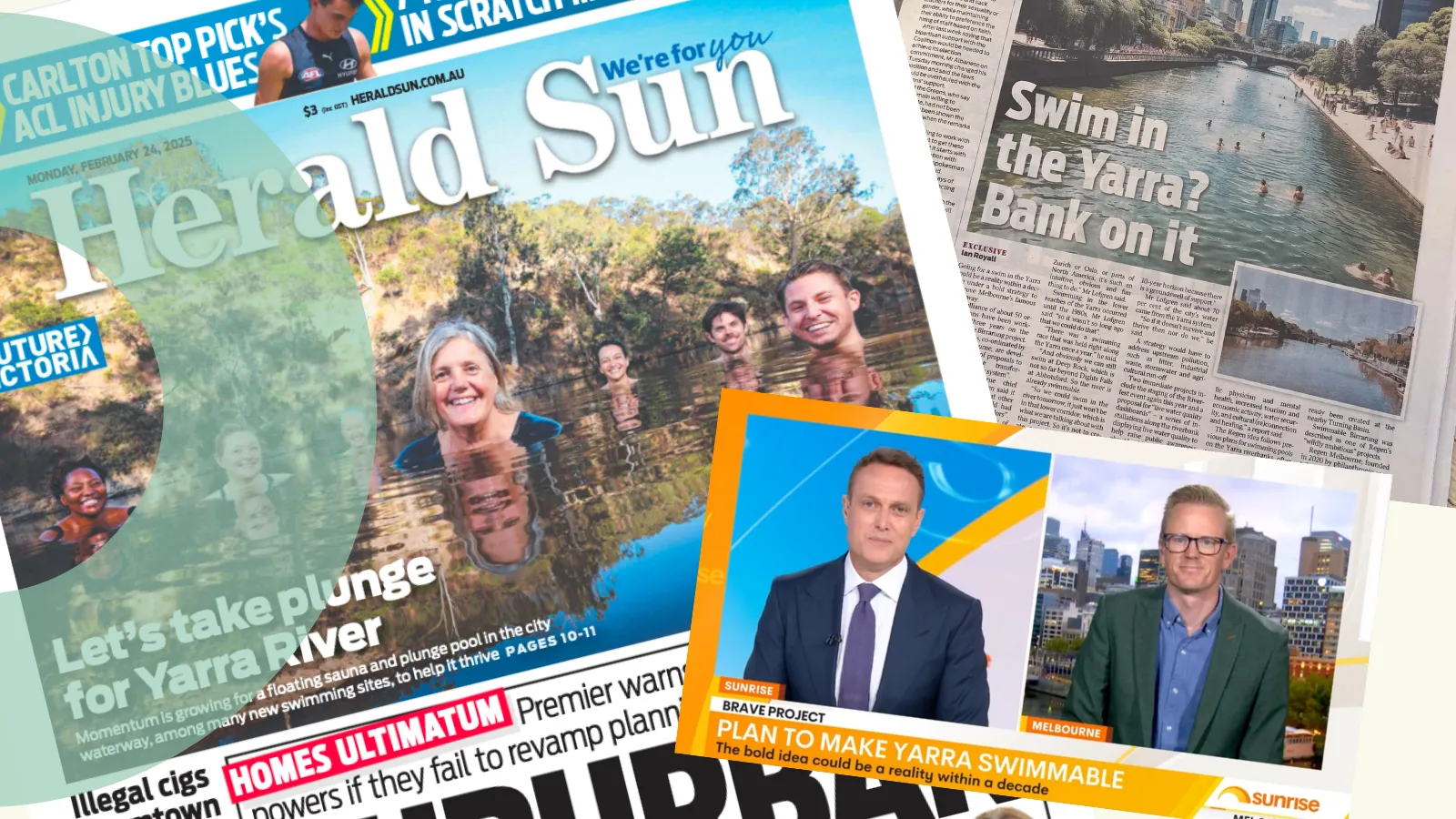
The stories we tell, and are told, shape our beliefs and values, and in turn our relationships with each other and our environments. This theme focuses on developing and disseminating new stories of regeneration within our Earthshots, across Melbourne and in relation to our economic system. Our learning questions within this theme include:
.jpeg)


%2520Medium.jpeg)