.webp)
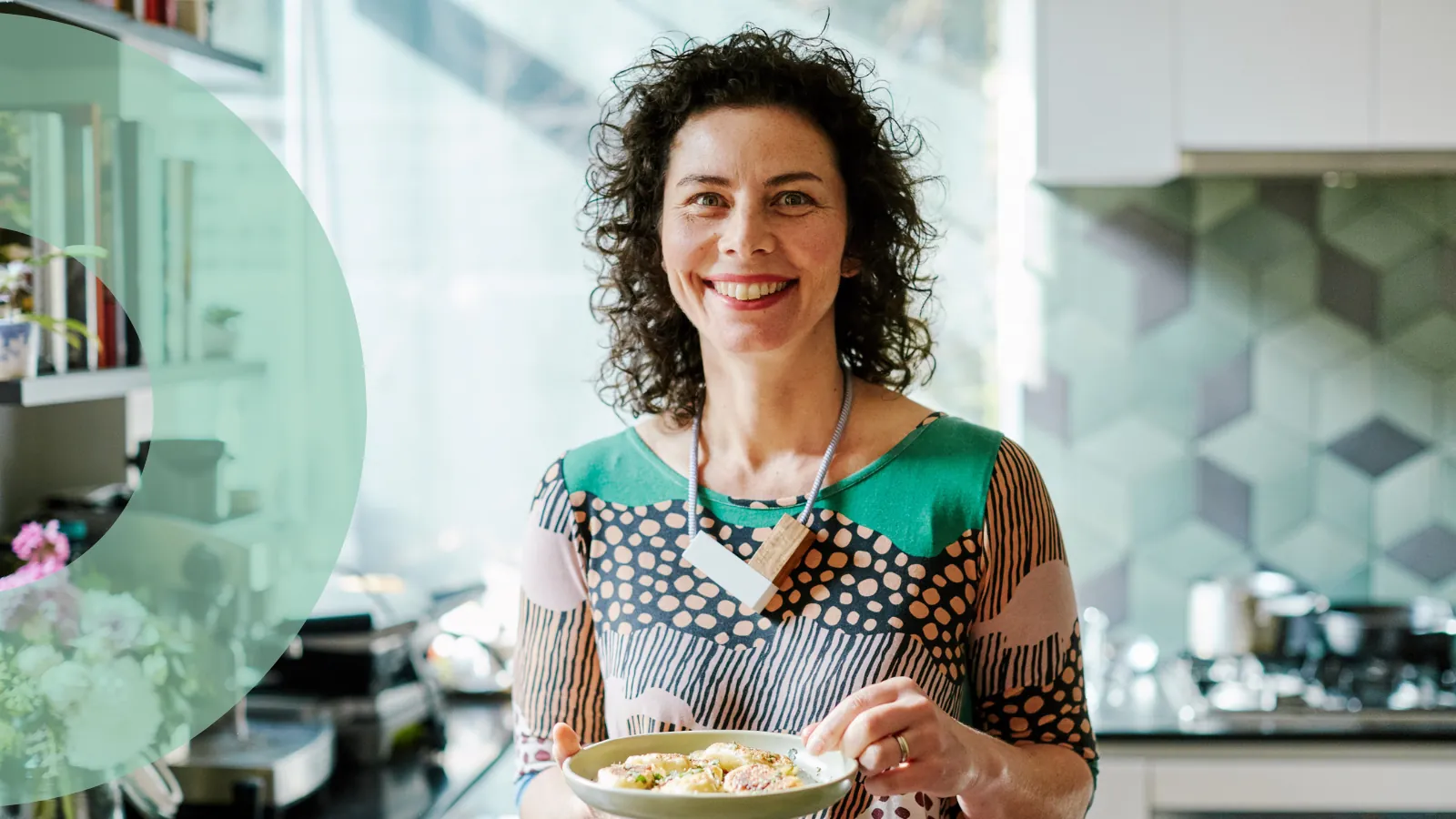
Want to know where to get the best vanilla slice, injera or bowl of Pho in Melbourne? Give Dani Valent a call. A widely respected food and travel journalist, Dani has been telling Melbourne's food stories for years, championing the diversity and complexity of our city via the people that grow our food and cook our meals. Sarah Smith sits down with Dani to talk community, food and her vision for a truly Nourished Neighbourhood.
Dani Valent loves scoffing a Four'N Twenty pie at the footy with her Dad. In fact, as a long-suffering Blues supporter she usually enjoys the pie more than the game these days. It's not a meal you'd expect a food critic to fess up to, but Valent isn't your average food writer. Starting out as a travel journalist, her lens for food was always culture first, "mouth notes" second.
Dani's first food assignment found her wandering the labyrinthine streets of Istanbul in search of Turkey's best yoghurt. What she stumbled upon was more than a spoonful of rich and creamy fermented milk. "When I reached my destination, what I found was stories of family and migration and nature. Descriptions of the goats coming over the mountain with the saddle bags full of milk, sloshing around to be churned. It was so mind opening," she says.
"Food cuts across everything from politics, immigration and the environment to history, science, the calendar seasons and chemistry," she says. "It's an endless ritual that provides an entry point to all of that. And obviously we all engage with food. We need to eat to live."
As food writer and restaurant critic for The Age, Dani has spent much of her life sharing Melbourne's local food stories. Championing the richness and diversity of our city via the people that grow our food and cook our meals. From an inconspicuous Filipino diner in Caroline Springs to a recently hatted power-lunch staple, she views every gastronomic endeavour as equal.
Years spent talking to Melburnians and eating their food means Dani has an intimate understanding of the complexities and challenges faced by Melbourne's food people and systems.
"Food cuts across everything from politics, immigration to the environment and history"
In 2025 there are many cultural layers that inform Melbourne's food identity. "When we think about this city, it's important to acknowledge that Australia in 2025 is grappling with its long, storied, rich, but also traumatic, Indigenous context," she says. "There's so much that was here for countless millennia that is no longer, but there's also an opportunity to engage with what is around now, and to look back and reflect and forge forward together."
It's these continued waves of immigration that Dani says make Melbourne what it is today. Walk along any number of streets in Melbourne's north or south east and you'll find traditional Greek food informed by the mass immigration of the 50s, layered with the sensibilities of modern Athens brought here by more recent arrivals.
Melbourne's proximity to the food that ends up on our plates also pegs us as a different kind of urban centre. "The fact that about half of Melbourne's produce is grown within two hours of the city is quite unusual in world metropolises, and it's something that we don't think about, prioritise or treasure enough," she says. "About 50% of Australia's broccoli is grown in Werribee – we should be celebrating that just as much as a new animal birth at the zoo," she laughs.
"The fact that about half of Melbourne's produce is grown within 2 hours of the city is quite unusual"
Protecting and nurturing these parts of our food system is vital to establishing a city of Nourished Neighbourhoods, Dani says. As is understanding how restaurants, market stalls and cafes function as glue for our communities in an increasingly divided world.
Dani highlights Port Melbourne Franco-Lebanese cafe, Salam, as a vibrant and compelling example of the intersection of food and community. Here, owner Mariana bakes her own French breads and pastries, but also makes beautiful Manouche and bottomless breakfast. "It's the kind of place where women in their 80s come and play music every Friday, because there's a piano, and hold an informal sing-along. Mariana just collects people and provides that real community space – of peace and belonging and beautiful flavours and endless endeavour."
Having recently spent 12 months researching a food guide to Footscray, Dani also name-drops the beloved inner west suburb as a favourite place to experience everything that makes Melbourne's food community so unique.
"The layering of immigrant communities in Footscray is really amazing," she says. "And they've got the market there, which is such a community hub. Footscray has a bit of everything: a Vietnamese area, a lot of Chinese businesses, the famous holdout Italian sweetshop, Cavallaro, an indie brewery in Moondog, a lot of wonderful Ethiopian restaurants, plus newer migrants from West Africa and a couple of South American restaurants – it's so vibrant, rich and resonant."
No matter where she eats in Melbourne, Dani says restaurant and cafe owners are all feeling the same pressure. "Probably the biggest topic in independent restaurants in neighbourhoods everywhere is the economics of running them," she says. "It's never been more expensive. The realities of increased costs of goods, increased running costs, and customers spending less is really squeezing them."
What does a Nourished Neighbourhood mean to Dani? "It smells like fresh baked bread and biscuits and roasted meats and salt and butter. It feels like a place that you could go for any type of nourishment, whether that's a quick bite in the morning, a working lunch, or a celebration dinner."
"A neighbourhood where you could look after yourself for a week and not leave the postcode," says Dani. A place for community, in service to the community.