.webp)
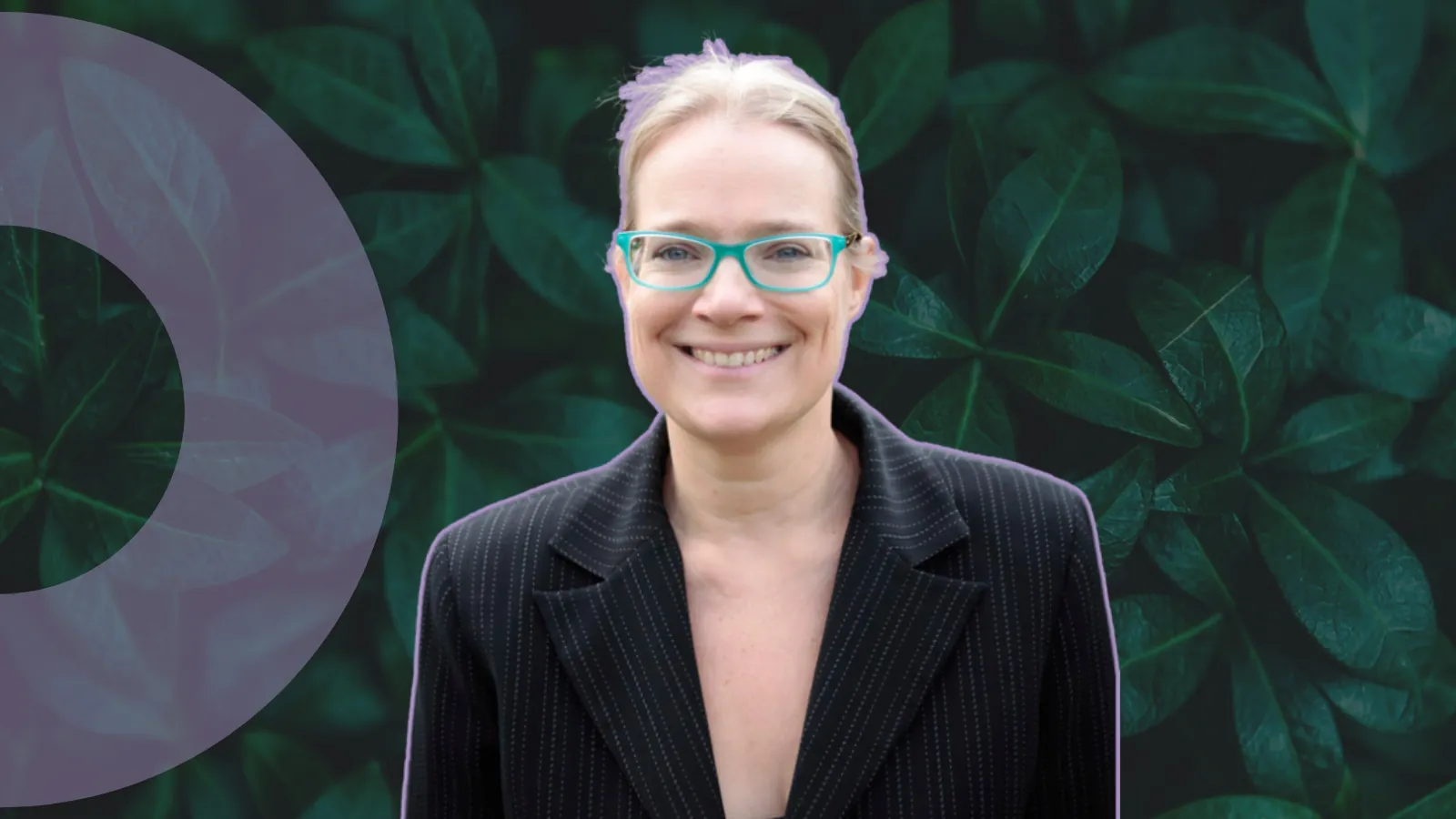
This month, we welcome Dr. Dominique Hes to the Regen Melbourne board, where she will take on a very special role: to represent nature. Here, Dominique reflects on the opportunities and responsibilities ahead.
Our work at Regen Melbourne is with and for nature and community. So it was important to us to find a way to embed the voice of nature deeply and meaningfully in our governance structure. We didn't want to rely on policies, documents or a set of values pinned to the wall. We wanted a living, breathing voice for nature at the centre of our work. Enter Dr. Dominique Hes.
Dominique has spent over 20 years working in the regenerative space. After co-founding the Living Future Institute in 2012, she has held roles at the University of Melbourne, Beyond Zero Emissions, Trust for Nature, City of Melbourne and is currently Chair of the Board of Directors at Greenfleet. Her book, 'Designing for Hope: Pathways to Regenerative Development', co-authored with Professor Crisna du Plessis, is about to celebrate its 10th birthday.
We caught up with Dominique to discuss her appointment and her vision for Regen Melbourne.
What's the thread that's held your interest in regenerative work?
Dr. Dominique Hes: The thread you can draw is curiosity, wanting to understand multiple perspectives and wanting to help find better ways for humans to become 'contributors' to a thriving future rather than 'extractors'. To be good ancestors to future generations.
"For me to come in and say, 'I'm nature, and my voice rules,' wouldn't be 'nature' at all. Nature would start with listening, trying little things and seeing what works."
How did your regenerative mindset develop?
Dominique: During my PhD I worked my way through the engineering and science mindset and realised that better research, tools or answers were not going to enable us to be those good ancestors. I concluded that we didn't need more tools – what we needed was better stories and better ways to connect people to the wonder and beauty of 'place'.
What led you to Regen Melbourne?
Dominique: I was invited to test the idea of who nature could be on the board. Having been a Non-Executive Director for 13 years, I felt frustrated at how difficult it was to give the natural systems a voice. My appointment is part of a three-year action research project exploring the enablers and barriers, legalities and opportunities of creating this role at the decision making table.
Why is the concept of putting nature on the board so pertinent?
Dominique: If we agree that everything we've created is based on natural resources, and those resources are based on complex systems impacted by what we do, then those systems are a stakeholder, like any other stakeholder that we represent on our boards. So for any board, it makes sense to have somebody that represents the complexity of the system that they're physically interacting with.
"Regeneration, at its core, is about listening to the reality of the people and system of place. Reality, physical reality, that is the critical word there."
How might the day-to-day realities manifest?
Dominique: When nature establishes a new system, it isn't established as an old growth forest, right? The lichen comes and eats the rocks that turns into the soil, and it builds and builds. Nature is responsive to reality, starting small. So my strategy on the board will be to listen for a while, try one or two things, and build who nature is on the board from feedback, as opposed to expectation.
What excites you most about this role?
Dominique: Reality is the water, the air, the soil, the nutrients in our food. Regen is fundamentally: 'how do we bring increased health, vitality and viability to those flows?' If our role as humans is to help the flows be vital, we create a care and understanding with the reality of the places we work and live in. And it is in this caring that we can maybe turn the ship of western, mechanistic, extractive thinking back towards what Indigenous people call Caring for Country. This is the greatest potential for the whole regen practitioner ecosystem.