.webp)
Vera Wang, friend of Regen Melbourne and a grant recipient and project lead at RMIT University, reflects on how connecting the Melbourne Doughnut with the Australian Indigenous Doughnut on Global Doughnut Day created a space to connect with Country and community.
My first time seeing the Melbourne Doughnut was in Service Design class, as part of my Master of Communication Design program at RMIT. Our lecturer, Miek Dunbar, one of the creators of the Greater Melbourne City Portrait with Regen Melbourne, introduced the model to us, explaining its purpose and the information it represented.
At first, I was drawn to the lovely hand-drawn icons in the visual. Then, when I noticed the red sectors radiating from the doughnut, I thought they showed areas where Melbourne excelled. However, Miek explained that the red sectors in fact represented crises, highlighting areas where action was urgently needed. This revelation challenged my initial perception of the city and made me see it in a new light.
I do remember thinking at the time, why a doughnut? What was so special about this shape or cuisine?
During my studies, I developed EcoQuest Melbourne, a tabletop game designed to localise the UN Sustainable Development Goals (SDGs) for Australian audiences. The project received funding from RMIT, with Miek as one of my supervisors. This experience deepened my understanding of using design as a tool for education and community engagement.
Many hands make a Doughnut
After completing my studies, Miek asked if I wanted to work with him and Regen Melbourne on a project. He mentioned planning an event for Global Doughnut Days. At the time, I had never heard of Doughnut Economics, so I thought he was referring to a doughnut food festival.
When I joined the team, they were already working on initial concepts for the event and refining the Melbourne Doughnut model. That's when I learned about the Australian Indigenous Doughnut, properly known as the Country Centred Doughnut Economy (CC-CE) model, which would play a key role in the event.
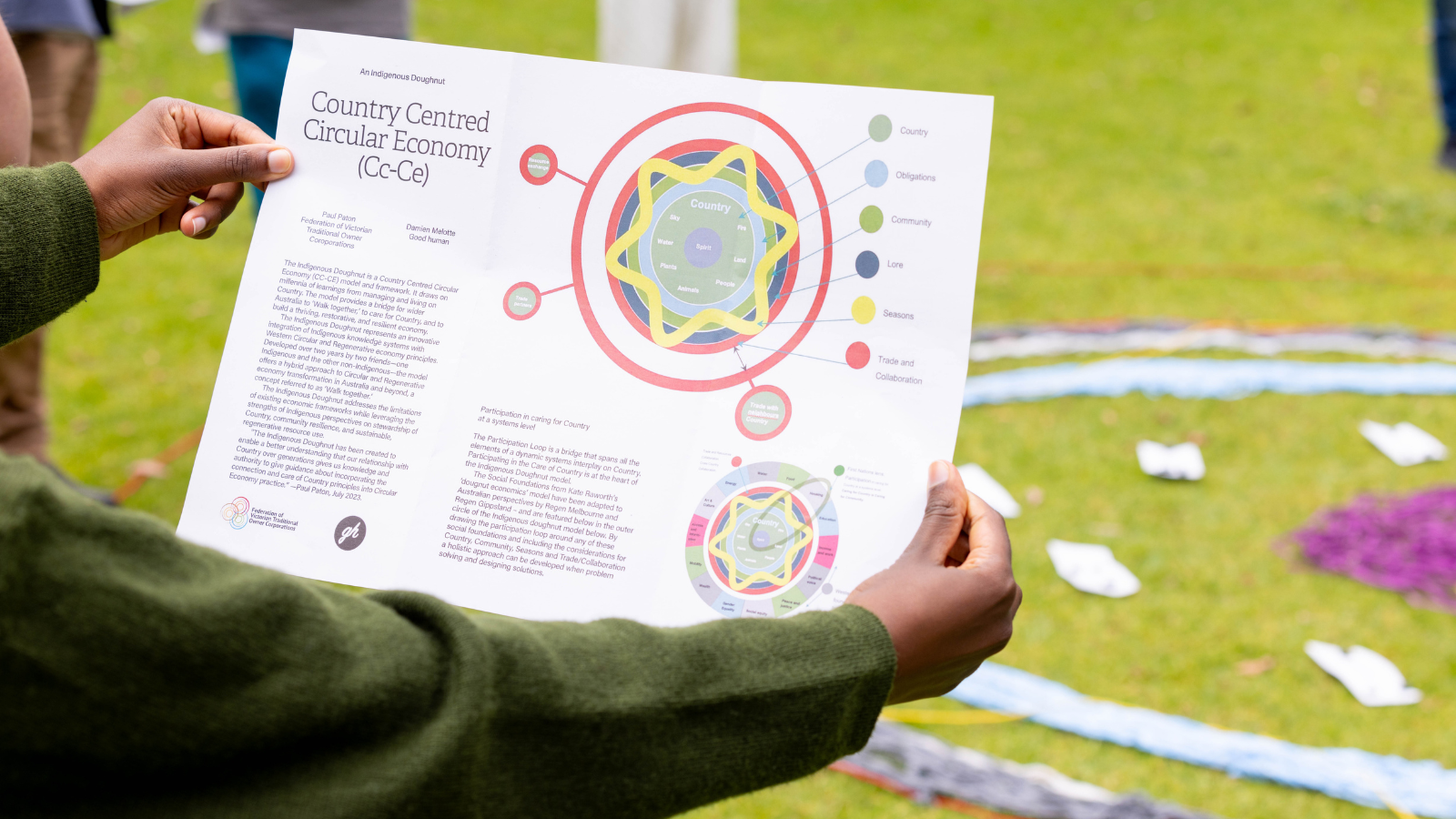
The idea behind "Walking Together on Global Doughnut Day" was to connect the Melbourne Doughnut model with the Australian Indigenous Doughnut model. Our team was led by Alison Whitten, Systems Lab Director at Regen Melbourne. Paul Paton, the Chief Executive Officer at the Federation of Victorian Traditional Owner Corporations, represented the Indigenous perspective and, together with Good Human's Damien Melotte, co-designed the Indigenous Doughnut.
Georgina Nolan, a lecturer at RMIT and a PhD candidate, played a pivotal role during the brainstorming sessions. Miek, as a core leader and key inspirer, was deeply involved in planning and decision-making throughout the project.
"[The doughnut] is not just a static model, but an invitation to step into this space and to reflect on how we coexist with the environment and envision a more regenerative future."
Nicole Barling-Luke joined the team, offering valuable suggestions during meetings and helping to organise and actively participate on the event day. Together, we developed a concept that celebrated collaboration and highlighted the importance of diverse perspectives in achieving sustainable and regenerative futures.
A search for community and connection
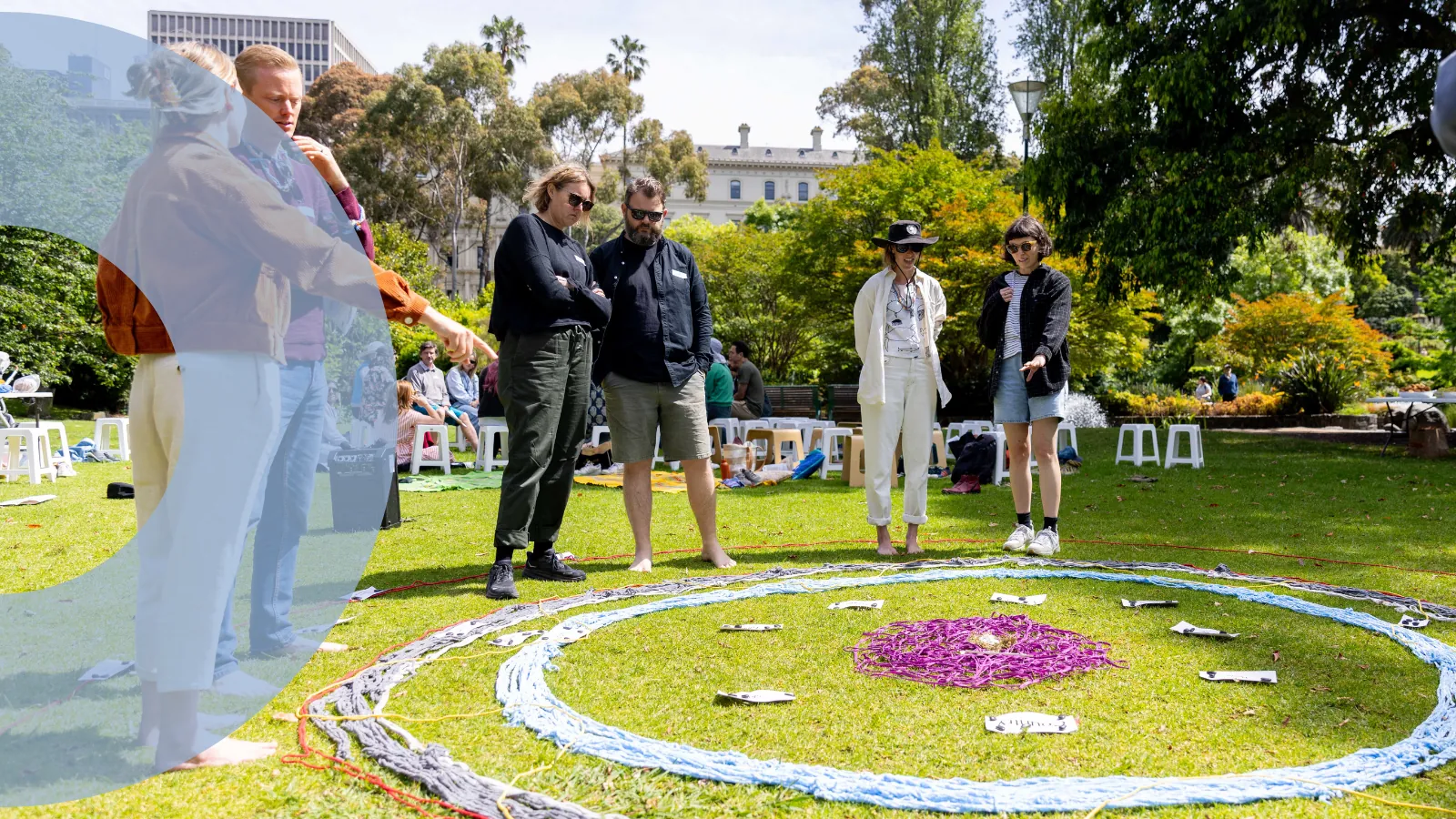
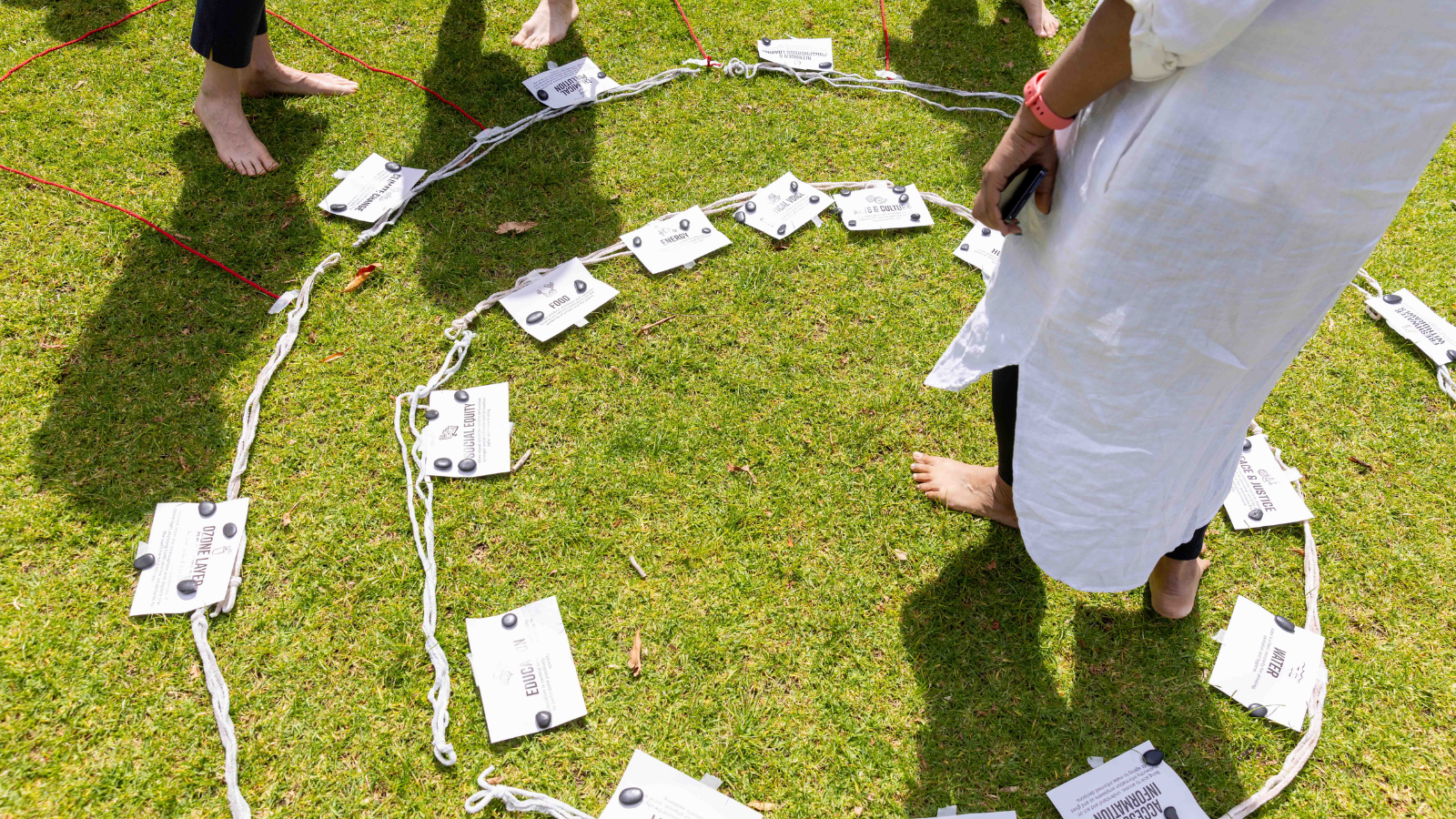
One of my main tasks was to build two large-scale doughnuts on the ground using natural and recycled materials. One challenge was finding materials that were easy to transport and assemble within the limited time, while also being safe for people to walk on.
One of Damien's key contributions was the suggestion to use an infinity loop to connect the two doughnuts, symbolising the continuity of communication and connection. This space also displayed 12 strategies for reflecting Indigenous knowledge and allowed participants to write their thoughts.
The doughnuts in action
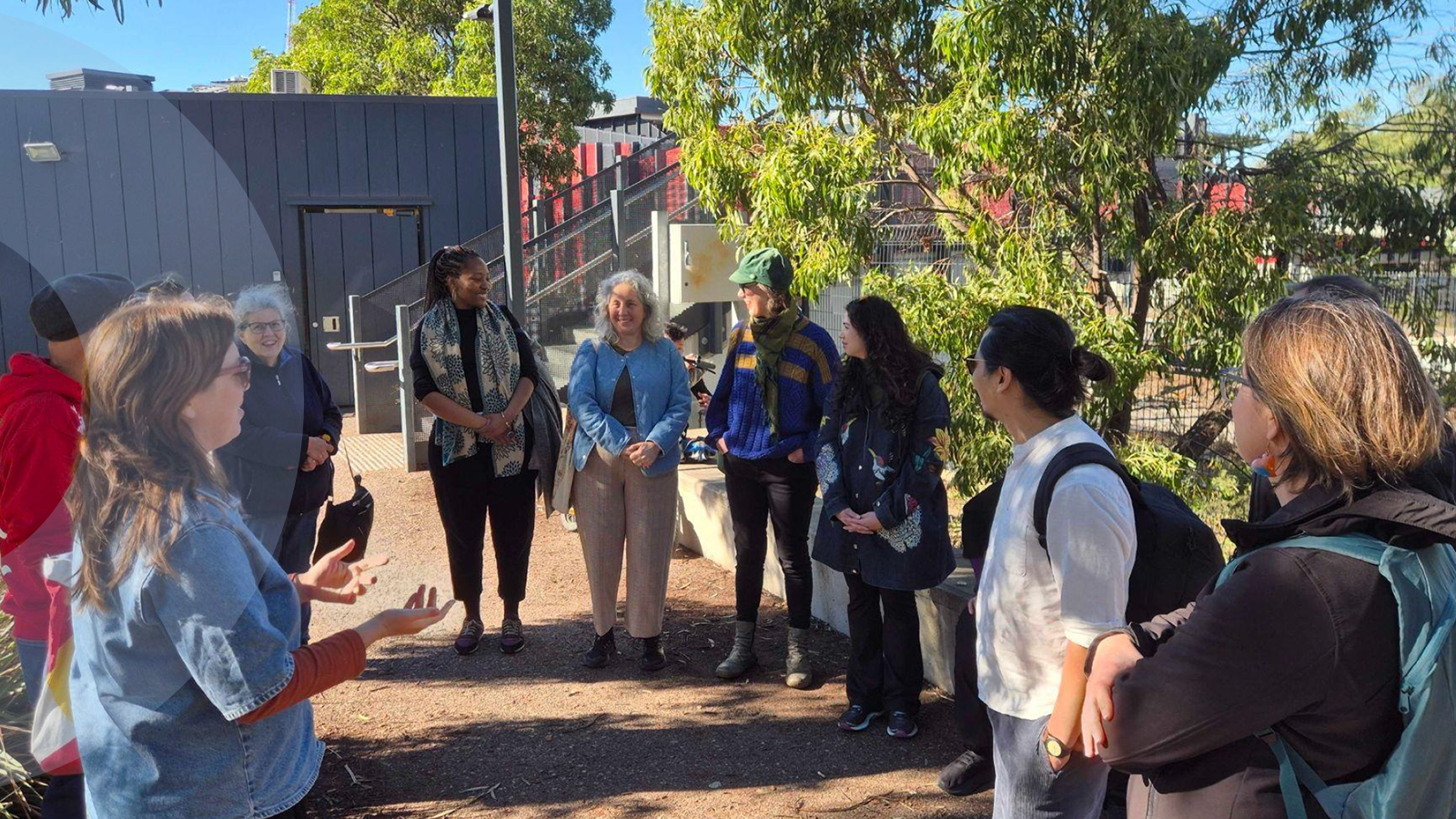
The event day greeted us with clear, sunny weather. We arrived early to set up the space, preparing the two doughnuts and the materials for participants. The day officially began with a Welcome to Country smoking ceremony led by an Indigenous elder, setting a meaningful tone for the activities to follow.
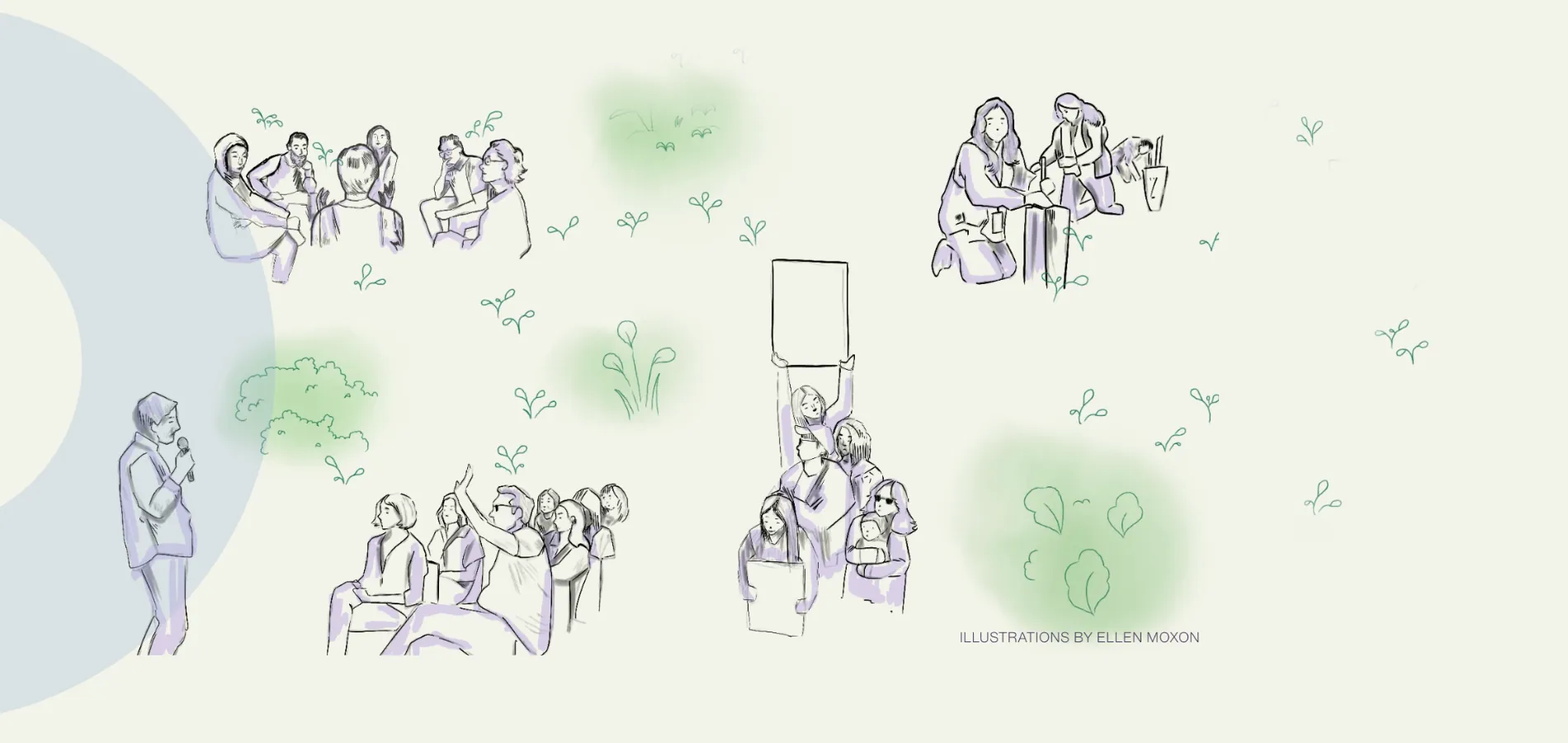
Participants were divided into three groups, each engaging with the doughnuts in different ways. One of the most touching moments for me was seeing a participant carrying a small baby, walking barefoot on the doughnuts alongside others.
At the infinity loop, participants used yarn and cards to leave messages. Small groups naturally formed, with people chatting and weaving yarn as they reflected on the models.
Why a doughnut?
Reflecting back, I think I've found an answer to the question I had at the beginning: "Why a doughnut?" The doughnut shape represents harmony in a space where the needs of all living beings and the limits of the planet are respected. It's not just a static model, but an invitation to step into this space and to reflect on how we coexist with the environment and envision a more regenerative future.
As the day came to an end, I felt a deep sense of fulfilment. It wasn't just about the physical materials or the event logistics, it was about the connections we created: between people, between cultures, and between ideas. I feel proud and grateful to have been part of something that brought people together to reflect on and celebrate the values of regeneration and care for the place we share.