.webp)
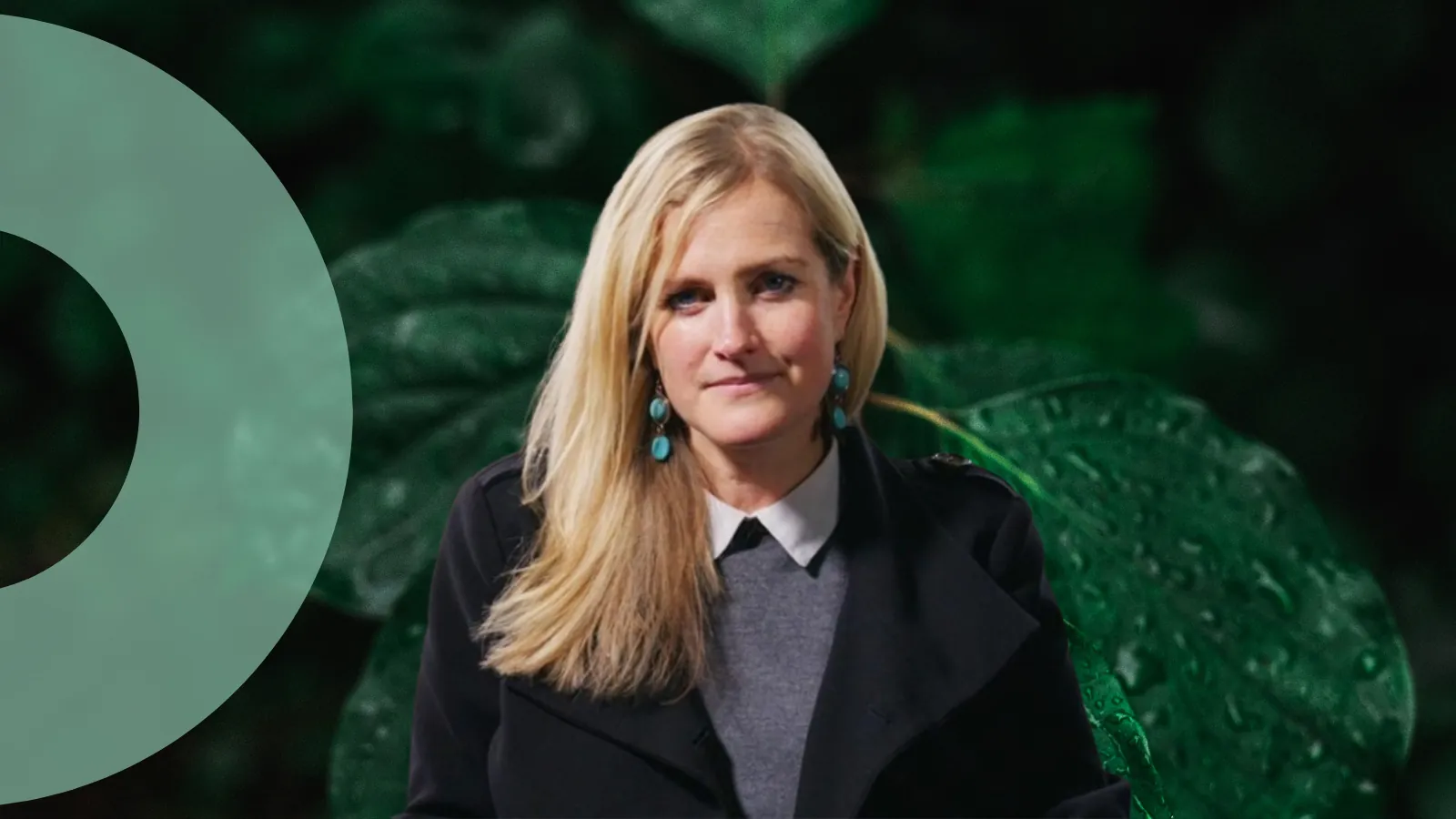
Can we create an economy that serves people and planet? As co-founder of the Wellbeing Economy Alliance, Dr. Katherine Trebeck has spent much of her life trying to answer this question. She sits down with Oliver Pelling to discuss what this vision might look like in the Australian context and why we should remain hopeful.
"The task is to channel our inner three-year-old," says Katherine Trebeck. "Three-year-olds are always asking, 'why?' When you keep doing that, you find yourself face-to-face with the economic system, and who's winning and losing in that system."
Dr. Katherine Trebeck is a political economist, writer and advocate for economic systems change. She's the Economic Change Program Director at The Next Economy, and a co-founder of the Wellbeing Economy Alliance. 'The Economy We Could Have', released by The Next Economy, explores how Australia could embrace a wellbeing economy.
The wellbeing economy is having a moment. Doughnut Economics Action Lab's Andrew Fanning and Kate Raworth released 'Doughnut 3.0'. A feature-length documentary, Purpose, is taking the notion to a global audience.
This interview has been edited for clarity and length.
Oliver: What keeps you engaged in the work?
Katherine: Personally, I'm still excited about economic systems change. So many challenges have economic roots. I've got really impatient with conversations that seem to be about fighting over better band aids. More and more people are starting to realise that the economy is one of the root causes of so many challenges.
"There's a need to build now, but also profoundly dismantle institutions and policies that are locking in the current system."
Oliver: Where does the wellbeing economy fit in?
Katherine: I tend to think of the wellbeing economy as a bit like a picnic blanket. It's not there to say we're another school of thought, but to emphasise the commonality across Doughnut Economics, the Solidarity Economy, First Nations futures, post-growth, feminist economics. At their core, they're all about a profound rethinking of the purpose of the economy.
Oliver: How do we bridge the gap from fringe theory to the mainstream?
Katherine: I talk about this idea of Lego wins. I could rattle off 50 different policies that governments have brought in that have potential to contribute to a better economic system. But they're prototypes – like Lego pieces: scattered, disconnected, and hence vulnerable. It's not a shortage of ideas, it's not a shortage of evidence.
Oliver: How do we find the coherence we need?
Katherine: What's holding us back is that we haven't yet changed our mindsets around how we think about the economy. From opinion polling around the world, people want much higher levels of equality, action on environment, action to take care of people.
"There was no conversation connecting the extent of environmental breakdown to increased insurance premiums, increased cost of food due to crops failing. So I think the task is to find a way to have those discussions."
Oliver: What does mobilisation look like at scale?
Katherine: Loads and loads of conversations where people feel heard, where they've had a chance to look at what's stressing them. But then working with them to identify the economic root causes. There was very little conversation that made the connection between the cost of living crisis and the way we design our economy.
Oliver: How do you look after yourself through it all?
Katherine: I live near a hill, and I try get up that hill and soak up the smell of eucalyptus. I love cooking – there's something tangible about it. And spending time with colleagues in the economic change movement to refuel. Connecting with your community is so important and so restorative.
Want more? Explore Katherine Trebeck's 'The Economy We Could Have' report.