.webp)
'Field Notes' is a fortnightly column in which Regen Melbourne's Lead Convenors provide on-the-ground updates and insights from their work and focus areas.
Did you know that there are no billboards in Bhutan and nearly every retail business is a small, local enterprise? Recently returned from a trip to the country famous for pioneering Gross National Happiness, Director of Research Alison Whitten shares lessons and insights from the road.
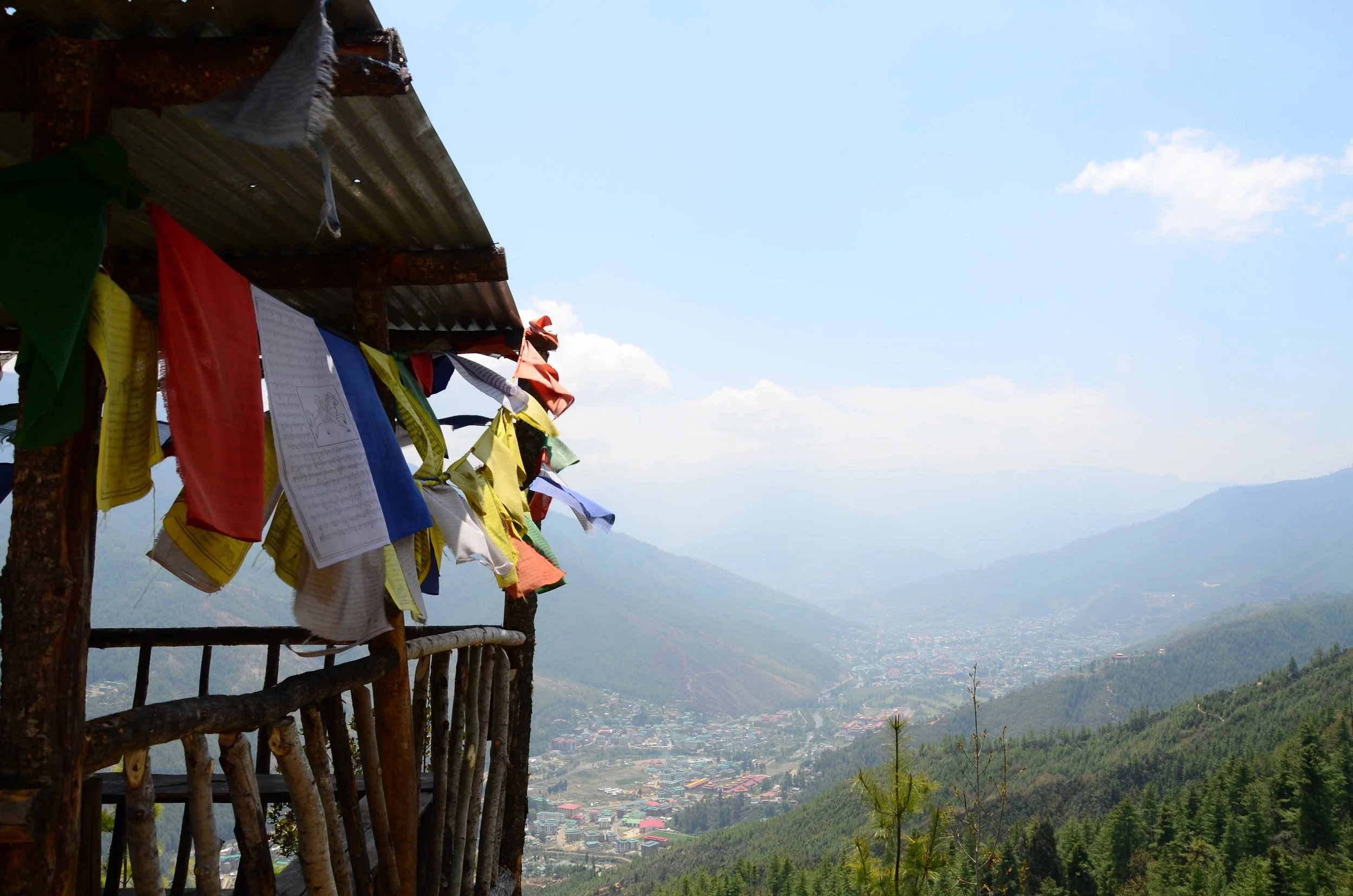
Landing at the international airport in Bhutan is not for the faint-of-heart. The plane weaves between the peaks of the Himalayas as it descends towards the Paro Valley, as if feeling its way through a narrow ravine.
At first, you can only catch glimpses of the mountains through the mist, but then the pine-covered slopes appear, startlingly close, nearly scraping the tips of the plane's wings. And soon after that, large, white houses that seem frozen in time begin to speckle the mountains.
I visited Bhutan in April as part of the Small Giants Impact Safari exploring Gross National Happiness (GNH). The GNH framework is of particular interest to me based on my oversight of Regen Melbourne's City Portrait in Greater Melbourne. I entered into the trip with a big appetite to learn more about what has enabled an entire country to orient its policymaking around wellbeing.
The trip was much more than an intellectual exploration, however. Impact Safaris are described as "a cross between a study tour and leadership experience" where "you can expect to be engaged through your head, heart and hands."
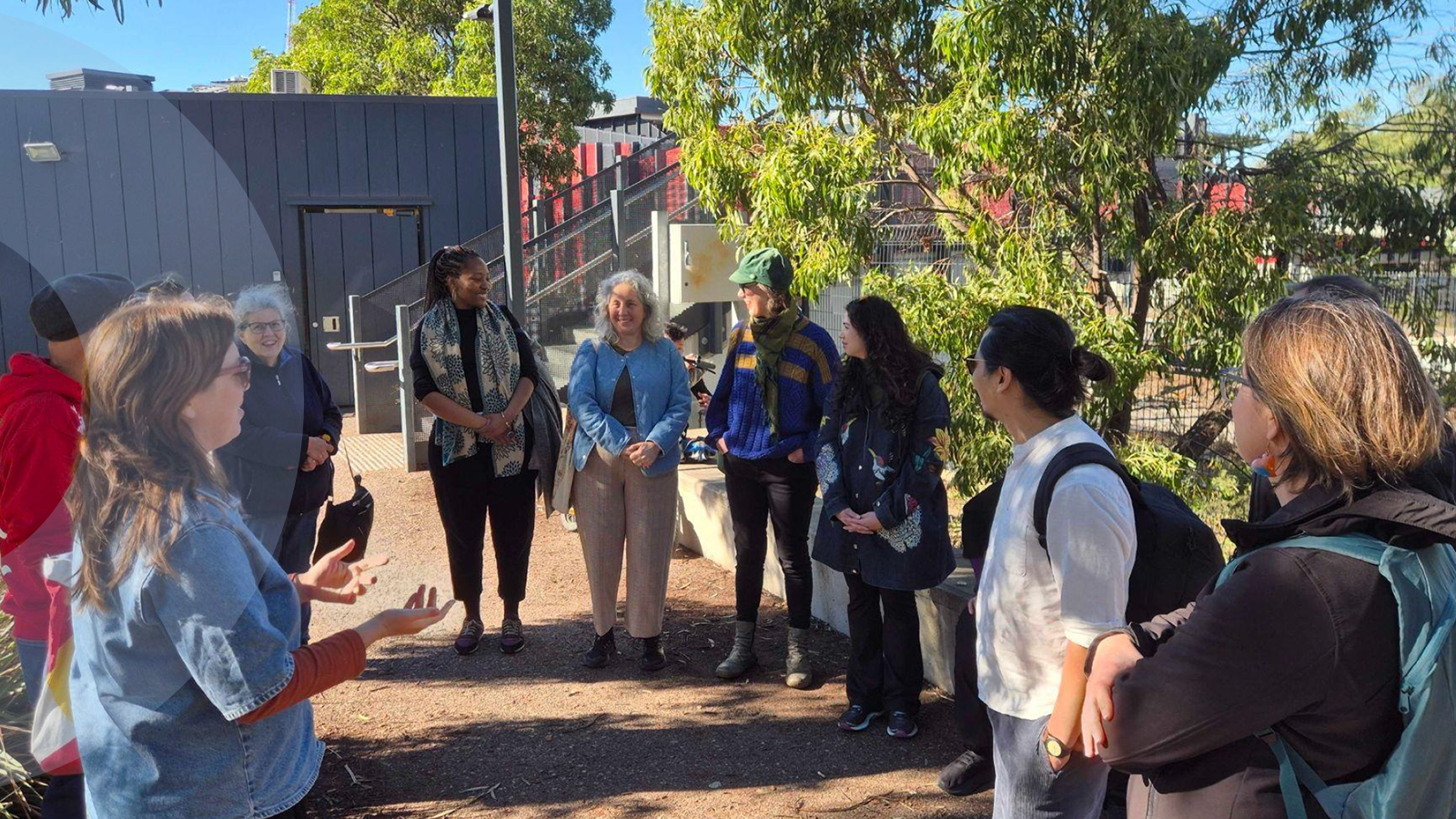
I think everyone on the trip left feeling a bit like extended family, owed in large part to the gracious hospitality of the GNH Centre and the many delicious meals we shared.
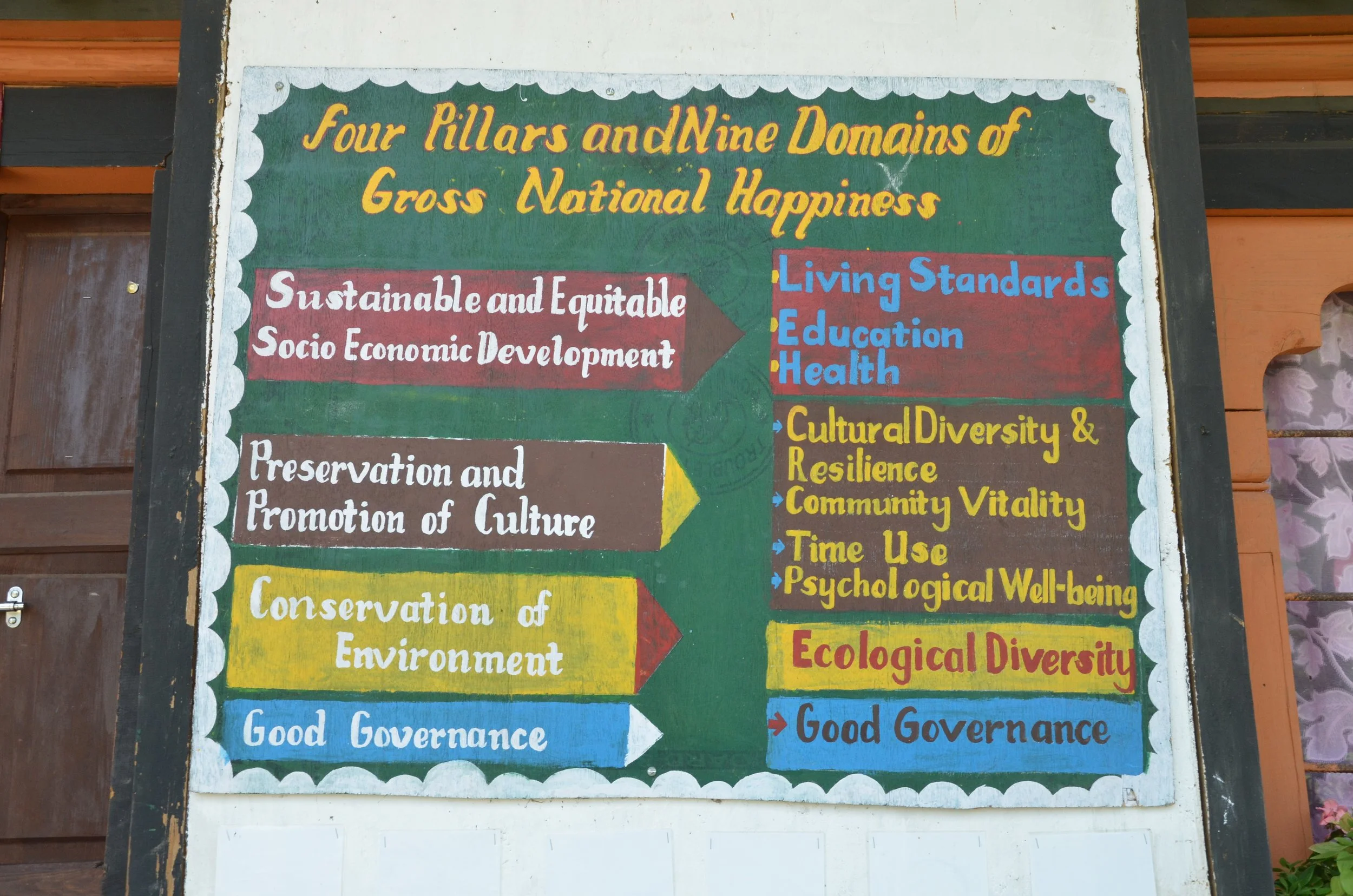
Bhutan is sometimes called the "happiest country on Earth," largely in reference to its policy and measurement system prioritising happiness as a national goal. This is not a superficial understanding of happiness: at a policy level, it is underpinned by a framework that describes individual and collective wellbeing with nine domains and 33 indicators.
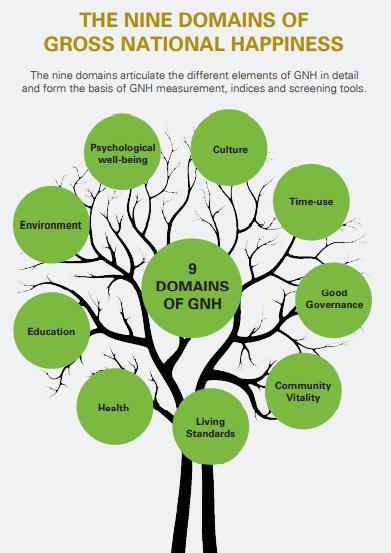
We explored the framework and its origins with the GNH Centre team, and learned about the periodic survey conducted to assess the nation's happiness.
Beyond the intellectual understanding, GNH is deeply felt and embodied culturally and spiritually, as it is fundamentally entwined with the country's Buddhist tradition. Here's some of what I observed, broken down by the four pillars of GNH:
Good Governance
We visited the Bhutanese Parliament and covered 400 years of political history in 20 minutes. GNH is embedded in the constitution, meaning that the government MUST work towards this policy framework. Beyond this, Bhutan, as the youngest democracy in the world, had the advantage of learning from other systems to inform its own.
For example, politicians must step down by the age of 65; local government is apolitical and defined as the 'closest to the people'; and religion is strictly above politics. Even spatial design plays a role: seats in Parliament are arranged alphabetically by district instead of by party.
Sustainable Socio-economic Development
First, there are NO BILLBOARDS in Bhutan. None. That alone calmed my nervous system as soon as I arrived. While I noticed a few familiar multinational brands in shops, nearly all businesses are small, local enterprises. This ties back to Bhutan's focus on 'sufficiency' as the aspiration for growth and happiness.
A GNH-infused economy means that tourism is tightly managed, local employment is prioritised and, since COVID, teachers and healthcare workers are now the highest-paid civil servants.
Preservation and Promotion of Culture
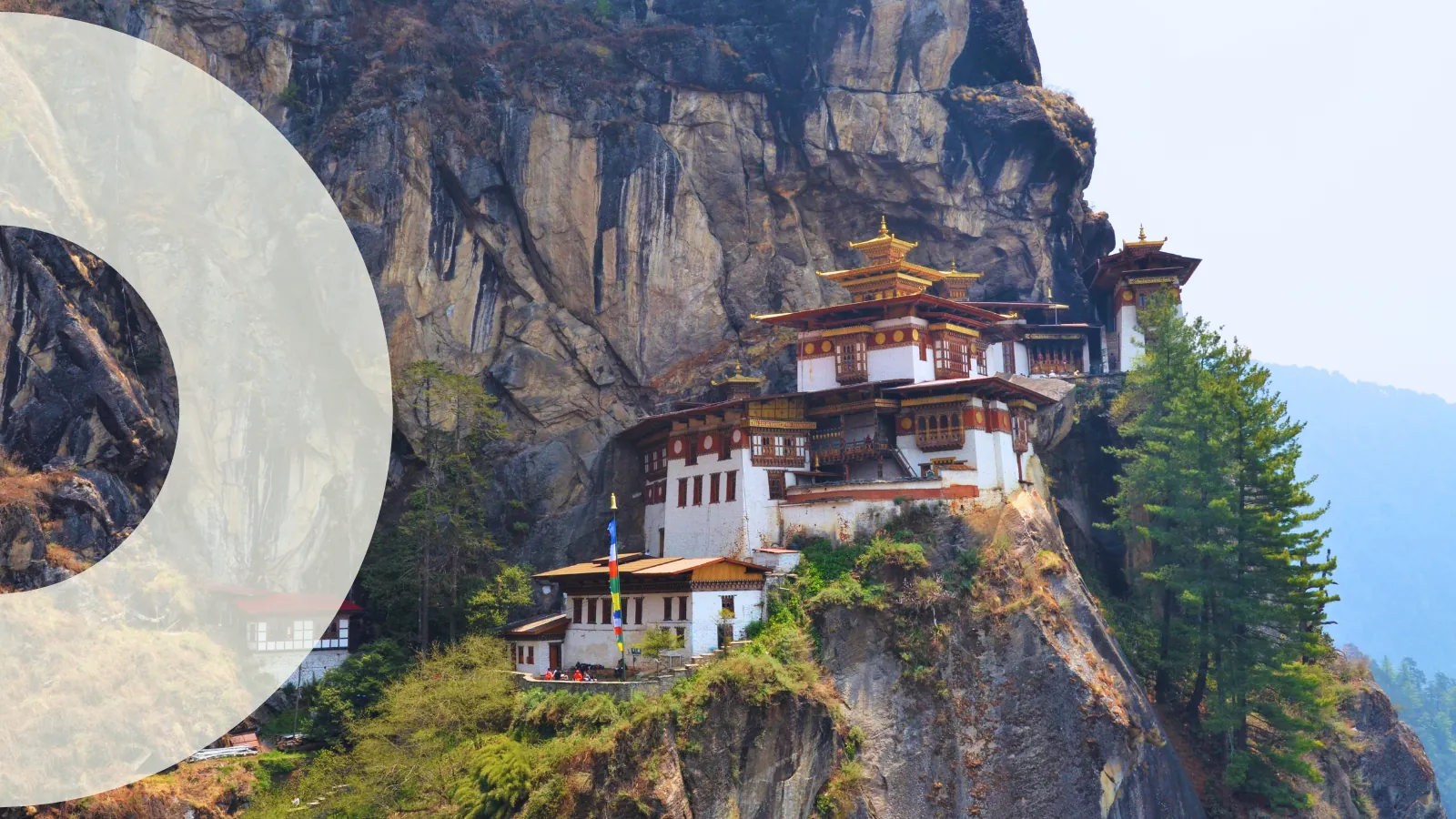
The preservation of Bhutanese culture is endlessly visible. Nowhere was this more obvious than in architecture, which carries a distinct regional style attuned to climate, social and spiritual considerations. Every building – from Parliament to petrol stations – is beautifully painted, carrying religious symbolism.
Environmental Conservation
Bhutan is the first and only carbon net-negative country. The constitution specifies that at least 60 percent of the country must permanently remain under forest cover. Everywhere we went, we saw clean water and ate local, organically-grown food. And yet, Bhutan is not immune to the effects of climate change.
Just as my time in Bhutan came and went all too quickly, I know that these reflections only start to scratch the surface. Reach out to me at alison@regen.melbourne if anything piques your interest or you'd like to add to my understanding of this special place.