.webp)


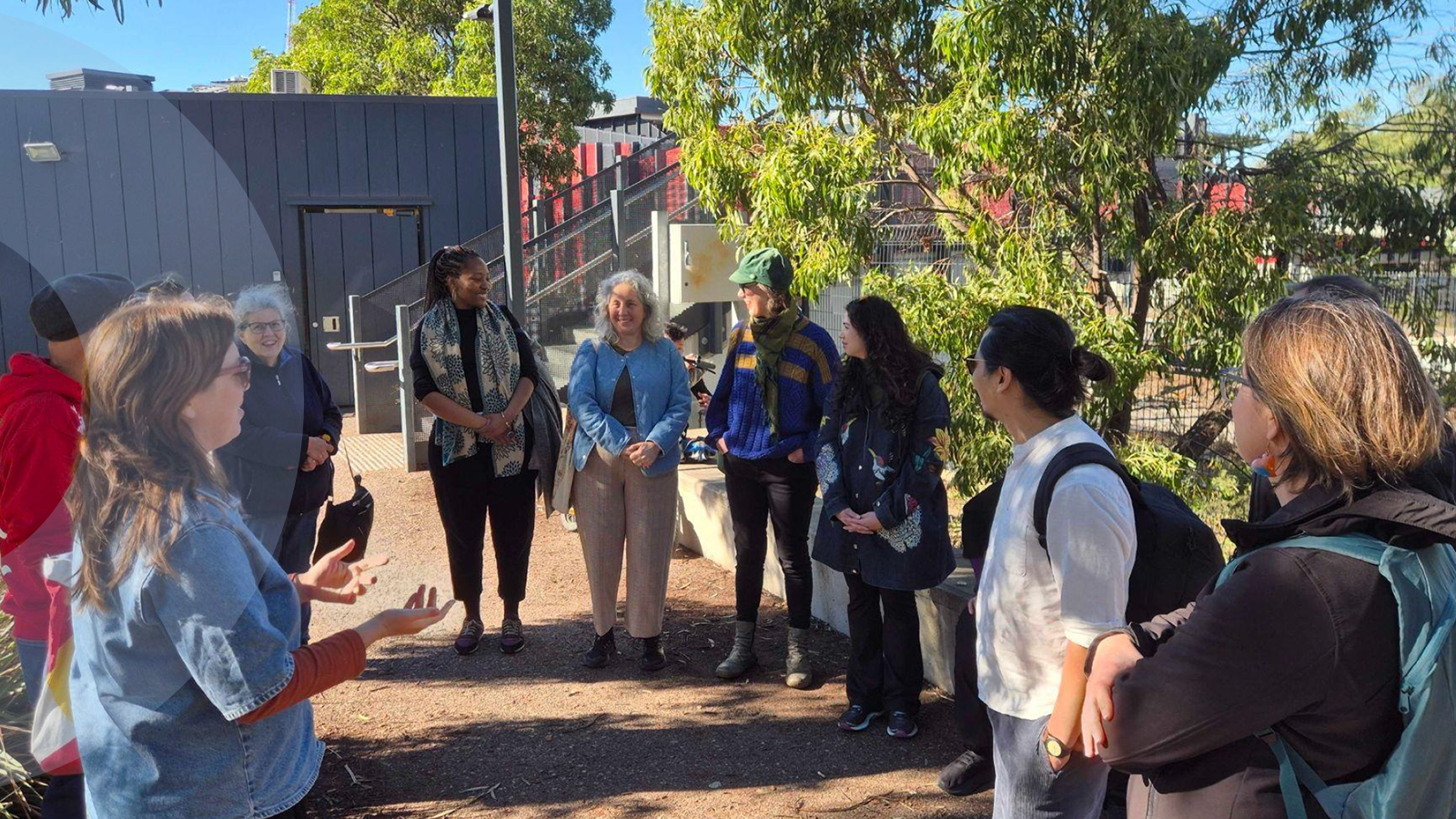
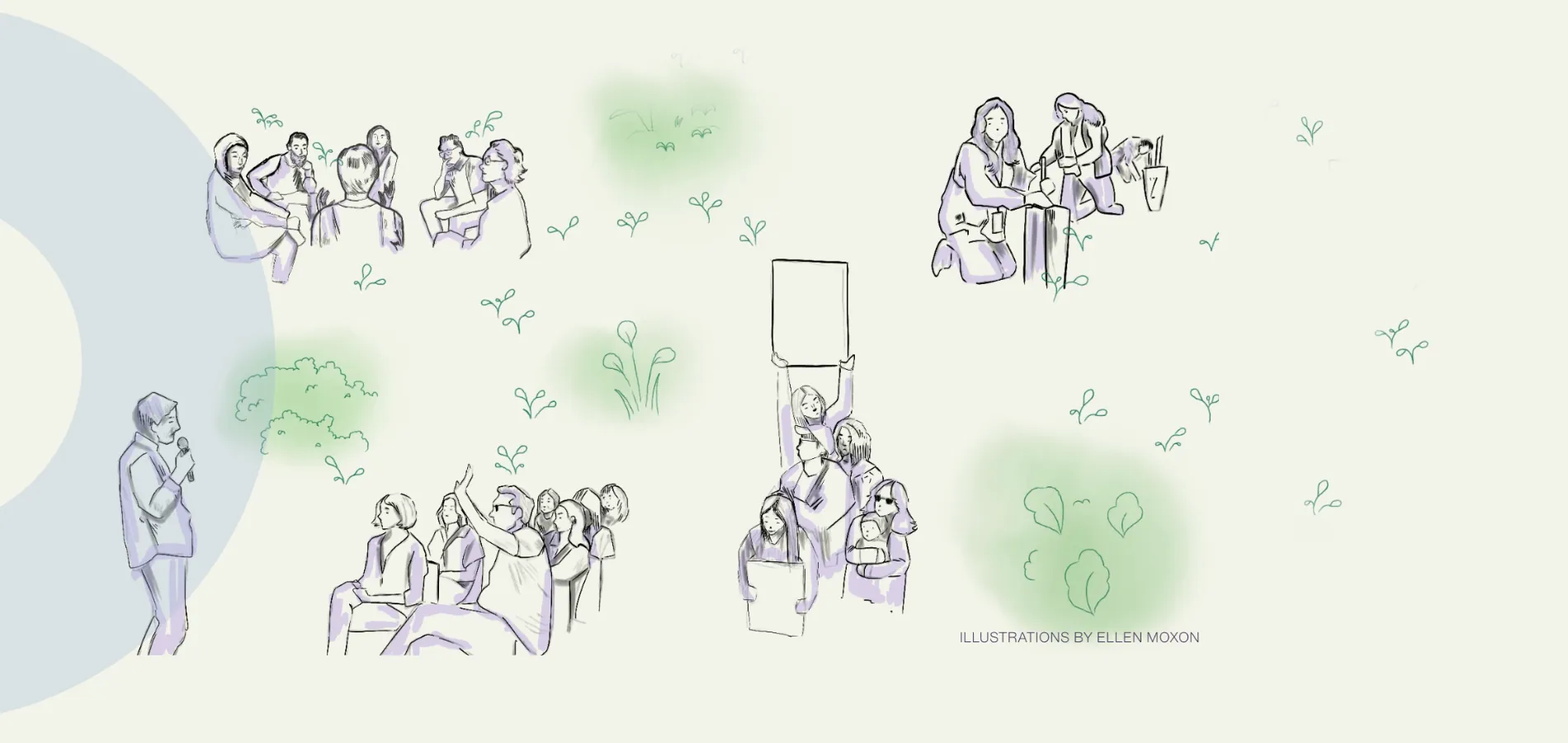
How can Greater Melbourne respect the wellbeing of all people? This was the prompt for a series of workshops we held in August to explore the role Melbourne plays – and more importantly, can play – in the global social, political and economic context.
Just as 'no man is an island', no place is an island, even if it might look like one on a map. Australia is no exception, and the same goes for Melbourne within that.
While Regen Melbourne exists to serve Greater Melbourne, we are well aware that the boundary around the city is not hard and fast. With this in mind, we are often zooming in and out to better understand Melbourne's relationship with the rest of Victoria, Australia and the world.
As part of the Greater Melbourne City Portrait released last year, we started to unpack our 'Global-Ecological' relationships by measuring our city's impacts on global environmental health. The outside of the Melbourne Doughnut quantified how much pressure Melbourne is putting on earth's ecosystems across dimensions like Biodiversity Loss and Land Conversion.
When it came to human wellbeing, though, the City Portrait started by focusing on the people of Greater Melbourne. This 'Local-Social' view formed the inside of the Melbourne Doughnut.
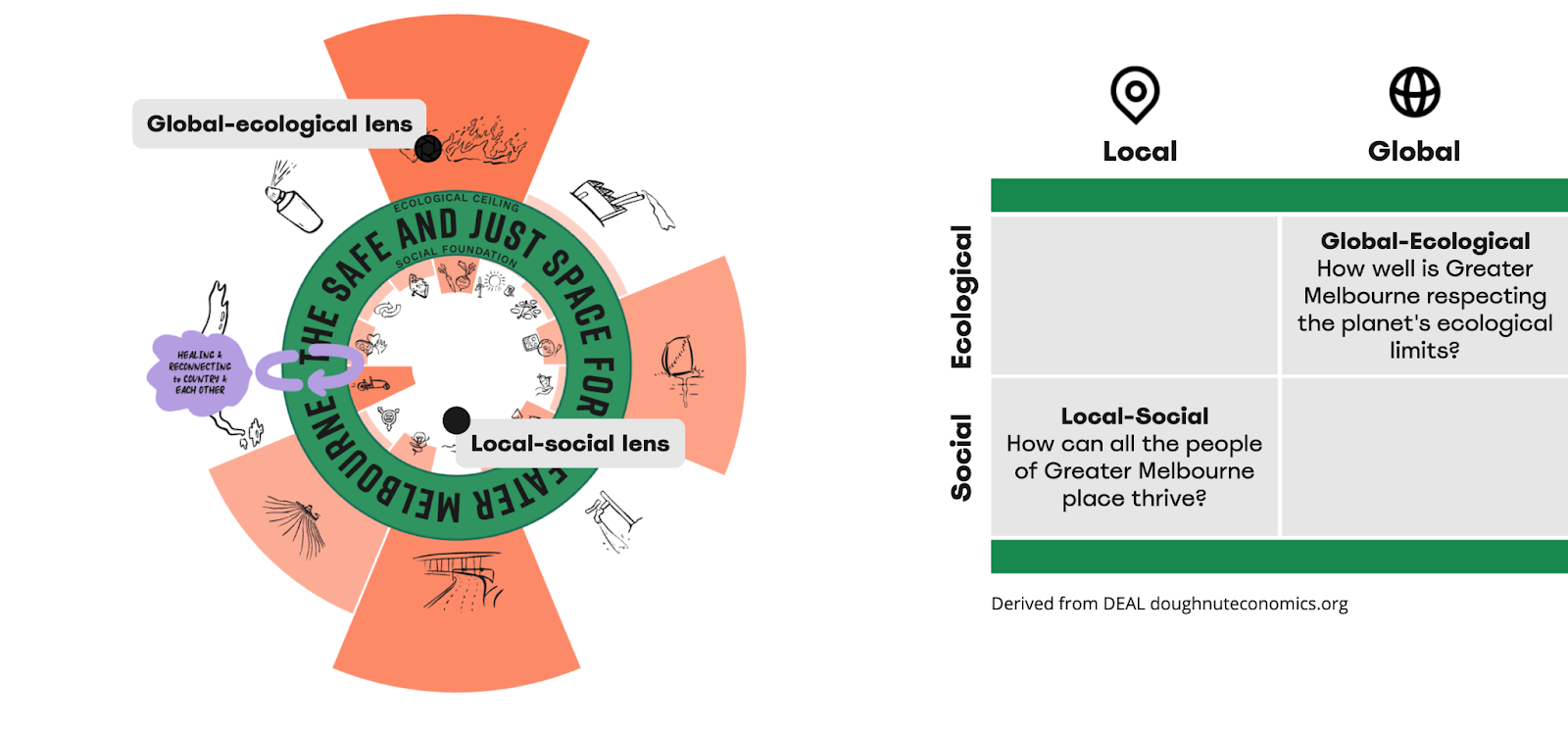
Now, we are ready to complete a 'full' City Portrait according to the Doughnut Economics Action Lab methodology, adding two new lenses. We have started with the 'Global-Social' lens, which helps us to explore the question, How can Greater Melbourne respect the wellbeing of all people?
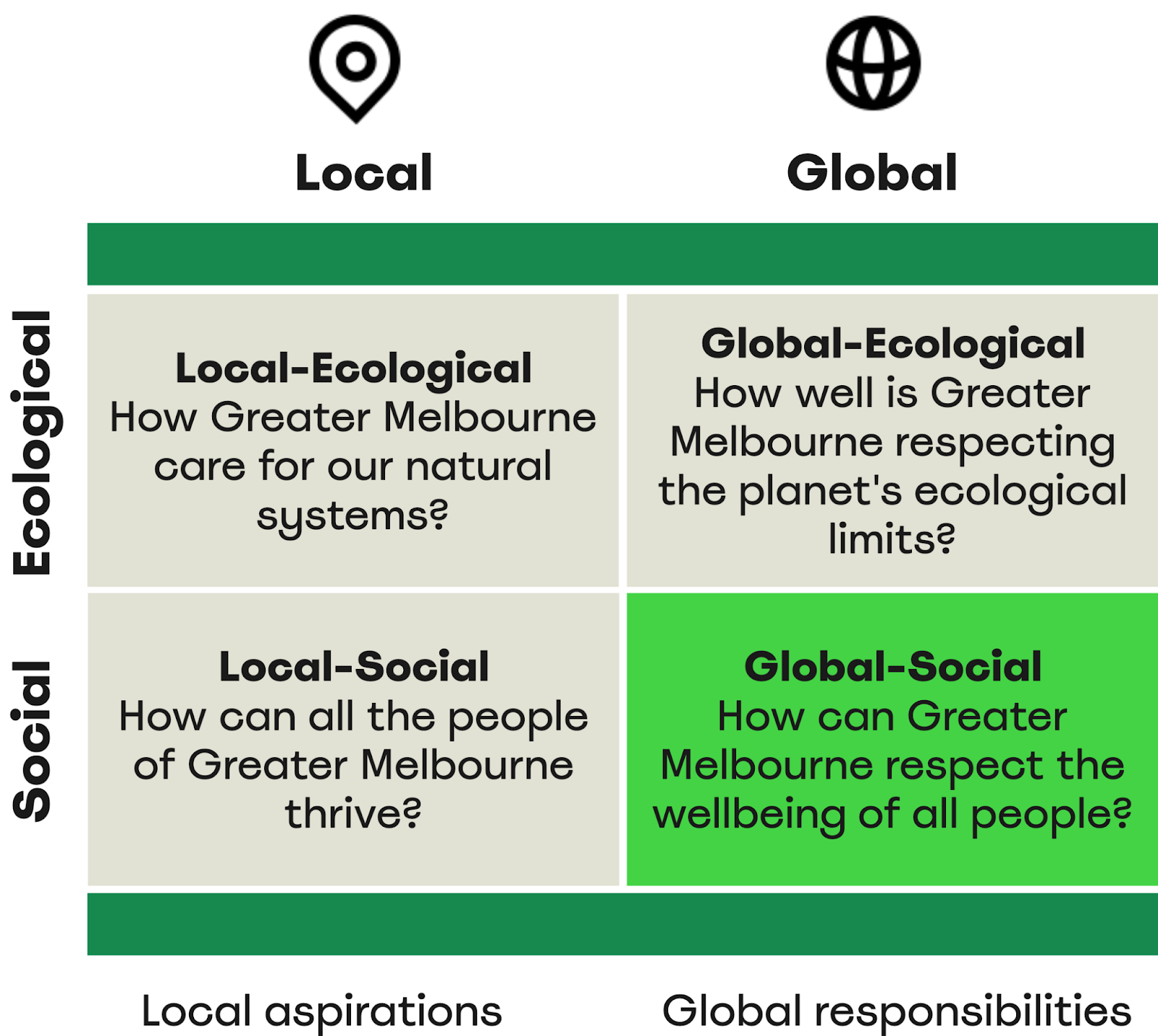
True to Regen Melbourne form, we kicked off with a workshop series in August covering different Global-Social dimensions across eight sessions, including:
Education & Knowledge
Supply Chains
Colonial Histories
Policy & Legal Regimes
Military Conflicts
Waste Management
Financial Flows & Conditions
Cultural Connections
As we wrap up the series, we now have a mega Miro board to start making sense of, looking for patterns across sessions. Some reflections have already emerged from the experience which will continue to guide our thinking.
First, these are heavy topics, and we all hold different relationships to them that are tied to our own global connections and identities. For example, talking about Colonial Histories is challenging when those histories are still alive and significantly impacting the wellbeing of people in Melbourne.
Related to this, it became evident that the workshops offered a space for all of us to listen and learn from each other, not just share what we know. This mindset created a sense of generosity and care in each session. It also reminded us that collective measurement – the act of shaping the content together – carries value beyond what it may produce on paper.
Finally, what is the point of measurement in relation to topics that are so vast, and often seem abstract and removed from our realities? We concluded each workshop by bringing the conversation back to how the topic of the day relates to our work and personal lives. How do we ground our understanding in global wellbeing in a personal way? Not surprisingly, this generated many ideas about action that can be taken locally to begin to shift our systems.