How can we better use and share public land in a way that meets social and ecological needs?
The Connected Corridors project is an ambitious initiative to transform 1,600km of under-utilised public lands across Greater Melbourne into a thriving network of ecological corridors. Spanning approximately 28,900 hectares this project represents one of the largest urban development opportunities in Australia.
The vision is to convert fragmented spaces such as powerline easements, road verges, train line easements, and pipe tracks into biodiverse corridors that reconnect ecologies and communities. By repurposing these single-use infrastructure sites, the project aims to deliver systemic improvements in community health, equity, and climate resilience, particularly in middle and outer-ring suburbs where high-quality green space is currently lacking.
Connected Corridors is a collaboration between OFFICE, Regen Melbourne and the University of Melbourne; each organisation within this multidisciplinary team brings a unique set of capabilities to the initiative. Together with a diverse array of partners, this project is now ready to move into action and delivery mode.
Regen Melbourne is a strategic partner in the Connected Corridors team. A team made up of OFFICE - a NFP architecture firm who have dreamed up Connected Corridors years ago and have been stewarding the research and vision - and UniMelb School of Design who are channelling the expertise and knowledge around the opportunity.
As a team RM, OFFICE and Unimelb are working towards unlocking pilot sites with landowners and communities to begin demonstrating what's possible.
After years of mapping and design, Connected Corridors is now engaging with landowners and communities to determine initial demonstration sites and seeking funding to support the next phase of work.

Initial report released by OFFICE & UniMelb
VicHealth funds further design work
Site identification and engagement continues
Strategic investment framework produced in report
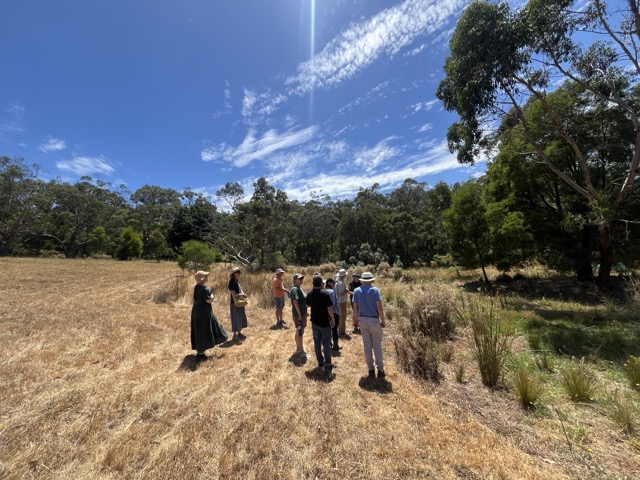
Learning exchange with BioLinks in Mornington Peninsula
Research, guides, and stories from the work underway.